June 18, 2026

03a China

The world’s top reserve asset is no longer US Treasuries, it’s gold, and that rally is being led by China, with Poland, Kazakhstan, and Brazil joining in the gold buying frenzy.

China among top buyers as gold overtakes US Treasuries in global reserves: ECB – South China Morning Post
News Source

EXCERPT:

China is one of the world’s largest buyers of gold as central banks shift towards the precious metal, which has overtaken US Treasuries to become the world’s top reserve asset amid higher valuations and its appeal as a geopolitical hedge, the European Central Bank said.

The world’s second-largest economy was the fourth-largest per-country buyer of gold in 2025 after Poland, Kazakhstan and Brazil, purchasing about 25 tonnes, the ECB stated. It estimated that China had bought more than 350 tonnes of gold since early 2022, more than any other country.

Gold accounted for 27 per cent of global official foreign reserves at the end of 2025. By contrast, US Treasury bonds – long considered one of the world’s safest reserve assets – fell to 22 per cent, with the euro making up 15 per cent. Those figures comprised both foreign exchange holdings and gold, the Frankfurt-based central bank said in a report this week.

Gold’s share topped Treasuries and the euro mainly because of “valuation effects”, with prices rising by about 60 per cent last year and 30 per cent in 2024, according to the report. These gains “mechanically increase the share of gold in total official foreign reserves”, the central bank said.

Originally published May 15, 2026 for our weekly Issue of Mindful Intelligence Advisor.  Subscribe to get weekly issues.

By Paul Gordon Collier, Editor

“If you ignore the dragon, it will eat you. If you try to confront the dragon it will overpower you. If you ride the dragon, you will take advantage of its might and power.”Chinese Proverb

OVERVIEW

China has been aggressively attempting to drive the U.S. out of regions it once dominated. The regions we are analyzing are Africa, Western Europe (the EU nations primarily), and the Americas. For each region, China has a different foreign policy approach, but it has a few tools it uses repeatedly.

The primary tool is entanglement, a strategy that is also used to procure resources at discount prices. This involves building infrastructure that is sustained by Chinese workers, or Chinese-paid workers, offering loan packages that create mounting perpetual debt, and integrating their economy into yours through trade.

The variation of its application comes through how China leverages that power to affect policy. In the case of Africa, there is little demand on policy, beyond Taiwan, but in the Americas, China wants a little more than mere profit.

The second tool is narrative. The use of this tool is much more difficult to document and track. It warrants a report on its own. For now, we will bracket off this tool and focus primarily on economic tools, which are China’s primary overt foreign policy weapons.

This report is intended to show the reader, just through the open policies of China, just how aggressive and invasive China has been in its ongoing effort to topple the U.S. as the military hegemon of the world.

It does not touch on the clandestine operations, such as the narrative tools deployed by bots and agents, some of which become California mayors.

AFRICA

China’s approach to Africa is more pragmatic than the other two regions we will analyze. They have adopted the “Anglo model,” which trades good deals on resources for infrastructure development.

Beyond resources, China wants entanglement with markets that make it difficult, if not impossible, to allow any quick African exodus from Chinese influence. Maximally, they want that entanglement to come at the expense of the West, especially the United States.

The China-Africa Cooperation (FOCAC) began in 2000; In less than three decades this institution has become the backbone of China’s Africa policy.

Through this it has trained soldiers and students, and served in UN Africa missions, where the PLA accounts for more troops than any other permanent member of the UN. It is second only to France in training African students.

China’s recently announced policy packages for Africa offering zero-tariff deals for 53 African nations.

Unlike the West, including the U.S., China makes no cultural or social policy conditions on its potential African allies outside of not acknowledging Taiwan as an independent nation.

  1. RARE EARTH MINERALS – The largest reserve of cobalt reserves sits in the Democratic Republic of Congo. China’s mining firms are operating within the region, but the region itself is highly unstable.

The pushback against Chinese incursions into more rare earth mineral fields has begun, with 13 African countries now banning certain “critical” rare earth minerals from being exported, with China as the unnamed target.

China’s development of the Lithium Green Lane is attempting to monopolize the global battery supply chain. Zimbabwe, Mali, and Namibia are part of the chain. China is now developing processing or “beneficiation” plants so they can export a more finished product.

  1. SAHEL – China is on most unsteady ground in the Sahel, where efforts to align with junta governments like Burkina Faso, Mali, and Guinea, have led to the juntas turning on the Chinese. What’s at state are more rare earth minerals, especially lithium.
  2. AFRICA AND TAIWAN – China’s One Nation policy, enforcing the notion Taiwan is a part of China, not an independent nation, is winning the day in Africa. Only two African nations, Eswatini and São Tomé and Príncipe, recognize Taiwan and sustaining diplomatic relations with them.
  3. AFRICAN ALLIES – China has three strong allies of note, Djibouti, South Africa, and Ethiopia. Djibouti is China’s most significant ally. China’s first overseas military base was built in Djibouti. It its China’s largest import point into Africa and China’s second-largest export point out from Africa.

Ethiopia is China’s “investment for bases” model. China has invested hundreds of millions of dollars building infrastructure in Ethiopia. That includes railways, communications systems, and even industrial parks. They have a tight military partnership.

The African Union Headquarters is located in Ethiopia’s Addis Ababa. It was built by China.

South Africa might be China’s most complete partner. South Africa is one of the letter countries in China’s BRICS scheme, an effort to counter the U.S. dollar’s world reserve currency status. BRICS stands for Brazile, Russia, China, and South Africa. China has bestowed on South Africa the status of “all-around strategic cooperative partnership.”

  1. AFRICAN ADVERSARIES – The only direct adversary of China in Africa is Eswanti, which is also one of only two African countries to sustain diplomatic relations with Taiwan. In response, China has severed all diplomatic relations with the country.

Eswanti is located completely within South Africa. Its geopolitical location within a strong Chinese ally gives it incentive not to support China.

Zambia isn’t a direct adversary like Eswanti, but it was the first African nation to default on its sovereign debt to China. This happened during the Covid-19 pandemic. As a result, Zambia is seeking relief from western authorities, though they haven’t fully broken with China either. China’s control over the nation’s mines and power grids makes that separation difficult.

  1. KENYA – Most of China’s relations with other African nations fit into some category of mixed. Kenya stands out as a bellwether of this type of relationship.

Kenya has received a lot of funding from China, which has seen a lot of infrastructure built, including their Standard Gauge Railway. But China is losing support in the country, as mounting debt to China is causing them to question their own sovereignty, a theme not uncommon with countries in this relational category.

EUROPE

China approaches Europe both as a single economic bloc and as independent nations they develop unique policies for. Underlying all their policies is efforts to tilt Europe away from America. The tension against that comes from Russia, which China has continued to support, even if not consistently aggressively.

The EU receives economic leverage in its American dealings by inviting China into their markets, and being allowed into China’s markets, but they also see China as a threat.

The long-held line is that China is an economic partner, but also a competitor, and a systemic rival. However, that last claim gets more dubious as much of Europe continues to become increasingly authoritarian.

The nations are coming closer together even as, at minimum, a plurality of people in Europe are growing increasingly hostile to these policy shifts towards Beijing’s governance model.

One wedge China has exploited recently is the “Global South” narrative, which is a narrative that a polar, or even bipolar world, created a great injustice in the global south. China uses the narrative to suggest Europe should support a multipolar world to avoid another global south injustice.

They don’t aggressively push Europe away from the U.S., they push them towards “neutrality” on the U.S.-China rivalry.

  1. HUNGARY – China’s strongest ally has been lost after Viktor Orban lost his re-election bid to EU-supporting Peter Magyar. The win immediately affected China’s power as Hungary quickly shifted from resisting aid to Ukraine to now supporting it. Hungary has been blocking many CCP-disproved policies, and now that is over.

However, Hungary’s entanglement with China is such that it cannot cleanly break away, so efforts have been made to at least normalize relations, even if Hungary is no longer going to be the CCP-s EU veto.

  1. LITHUANIA – The only clear adversary of China, Lithuania represents a spirit held by other Balkan states, like Estonia and Latvia.

Lithuania decided to recognize Taiwan, which led China to sever all ties with the nation. In response, Lithuania allowed Taiwan to create a “Taiwanese Representative Office” on its soil.

  1. GERMANY – While Germany is China’s biggest economic trade partner, the country is becoming concerned about just how dependent they now are on Chinese supply chains while China has also become an industrial competitor.

Germany is a bellwether of the risk of the entanglement strategy, especially among the citizens themselves.

  1. ITALY – China’s Belt and Road Initiative got its first home in Europe in Italy, the first G7 nation to become part of the project. However, as China moved in and projects moved forward, Italy had second thoughts. Just four years later, they would formally exit the belt and road.

While Italy still wants to trade with China, they are no longer interested in opening themselves up to the Chinese entanglement strategy.

CHINA AND THE AMERICA

Within the Americas, China is looking fundamentally to disrupt American power and shatter the mantle that the Americas are the United States’ “backyard.”

It’s approach to each nation is more wholly systemic than Europe’s policies, which are more systemic than Africa’s policies. While America is always a part of almost every relationship China forms in these three regions of the world, it’s not as prevalent as it is in the Americas.

In addition to blunting U.S. power, China also relies on Latin America for essential commodity exports. China has become the top trade partner for numerous South American countries.

In keeping with its entanglement strategy, China is also building infrastructure in Latin America, including railroads, mining operations, and energy grids.

On the Taiwan front, China has turned most of countries towards its One China policy, with holdouts in the Caribbean, including Belize, Haiti, and Saint Vincent.

Beginning in the early 2000s, China’s Belt and Road initiative started in earnest in South America, making it the number one trading partner of the whole continent. Over $140 billion in loans have been issued through the project since 2005.

As in Europe, China is also using the “Global South” narrative to push the Americas to minimally remain neutral in the U.S.-China rivalry.

However, it’s policies in the America’s took a serious hit when the United States effectively replaced a pro-Chinese regime in Venezuela with a pro-U.S. one.

  1. THE VENEZUELA SHIFT – In January 2026, the U.S. pulled off a stunning operation in the middle of the night that saw the balance of power shift in Venezuela by the time the sun rose. Pro-China President Nicolas Maduro had been seized by U.S. forces and taken to a U.S. prison where he sits today, facing numerous drug trafficking related charges.

Venezuela was the strategic crown jewel of China’s foothold strategy in South America. Through Maduro, China was given great access to the continent. Not only did China lose the foothold, they also lost roughly $60 billion the Maduro regime owed them.

The collapse of the Maduro regime has led to the end of the so-called “Bolivarian axis.” Venezuela was the lynchpin of the axis, which included Nicaragua and Cuba. As a result, Beijing is shifting to an “Institutional” strategy.

They are no longer looking to back “rogue” regimes, but instead want to rely on “institutional” democracies that submit more easily to international law.

The ability of the U.S. to snatch Maduro so easily is leading China to want to develop networks outside of U.S. observation, especially financial ones. A key development is China’s digital Yuan (e-CNY), which hopes to replace the U.S. controlled SWIFT system that most of the world uses to move currency legally.

China’s policy of avoiding military conflict with the U.S. has caused it to shift from hopes of developing a military presence openly in South America to more clandestine developments, along with continued entanglement strategies.

China also took a major surveillance hit by losing access to Venezuela’s satellite tracking stations. Overnight, it also lost access to all of Venezuela’s military ports.

The general world policy expert consensus is that this action has not finished China in the Americas, but it has forced it to take a more patient approach as it bides its time before it can sufficiently challenge the U.S. militarily.

China’s entanglement strategy in the Americas appears to have avoided the excesses in Europe and Africa. It hasn’t raised widespread local concerns of Chinese dependence, but it has made these countries unable to fully disentangle from China.

While the South American countries are not likely to challenge U.S. policy in relation to China, they’re also not likely to stop doing business with China anytime soon.

One good outcome for China is the emerging notion of the “lawlessness” of the U.S., which will open doors for China. However, its inability to offer military protection to such a key ally as Maduro somewhat blunts the opportunity, since its standing as a security protector is significantly less than it was before January 2026.

  1. PANAMA – The first major blow to China’s presence in the Americas came with Panama throwing China out as the operator of the Panama Canal. The move has pitted Panama against China directly, with the U.S. providing security.

Outside of the United States, it’s the only nation of the Americas to be in an adversarial role with China.

  1. CHINA’S AMERICAS ALLIES – Brazil, Cuba, and Peru now stand as the jewels of China’s alliance in the Americas. Of the three, Cuba stands on the precipice of being lost to China, but, for now, it is still holding on.

Brazil is the largest agriculture exporter in the world. China is the world’s largest agriculture exporter. Between the two, their volumes are so high they can bypass western standards and set their own global “green commodities” standards. This is called the “Beijing-Brasilia” effect.

Cuba offers China a military presence, which is why, in part, the U.S. is moving so aggressively to affect regime change. Cuba’s ties to China are more ideological than any other nation in the Americas, which has made the relationship an easy fit.

Peru has become maybe the most economically entangled country with China of all the nations of the Americas. The capstone of that relationship is the $1.3 billion mega-port in Chancay. It is strategically the most valuable asset China has access to in all of the Americas.

  1. COLUMBIAColumbia is in a state of limbo when it comes to China, with 2026 elections determining the China’s fate. The country signed a belt and road agreement with China in 2025, but that deal is now in doubt. The elections happen at the end of this month, May 2026.
  2. MIXED ALLIANCES – Most of the nations of the Americas fall into the Mixed Alliance category, with Canada, Mexico, and Chile, being the bellwethers of the group.

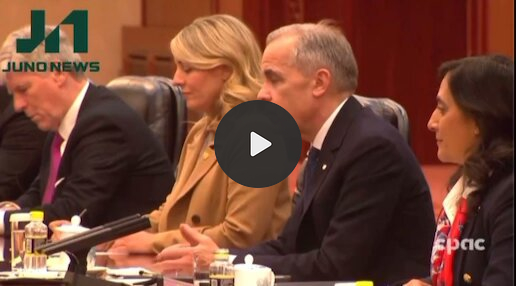
Canada had a good relationship with China until several scandals, including accusations of election interference, caused the relationship to collapse. Now, the Prime Minister of Canada, Mark Carney, has been working on mending those relations, even calling for the multipolar vision of the world China has been pitching.

Carney appears willing to use China as a blunt on President Trump’s power, but Canada’s security mistrust of China isn’t going away any time soon.

Mexico is China’s second largest regional trade partner, but one not wholly trusting of that relationship. Mexico views China as a direct goods competitor and has imposed tariffs on China to minimize its presence. Mexico’s entanglement with the U.S. insulates it from China’s full entanglement strategy.

Chile has strong economic ties to China, but it is not so keen to have China become entangled in its economy. It also favors U.S. security ties, which it also feels more ideologically aligned with. Chile remains a top 3 major partner for China in the Americas, but one kicking its heels in protest.

SUMMARY

In less than 30 years, China went from a backwater foreign policy power to one second only to the U.S. in world influence, and that claim might be disputed.

Partly on bluster and partly on real accomplishments, China has built its entanglement into multiple nations who once relied primarily on the U.S. for security and commerce. Their foreign policy is thoughtful, complex, and above all else clearly serves the best interests of China.

In 2026, China suffered two major setbacks to its foreign policy schemes, the fall of Maduro and the loss of the Panama Canal. With Iran threatening to totter, a third catastrophe could soon be on the way. Yet even if Iran were to fall, China would still have solid options to overcome the loss of Iran, and neither the Panama Canal nor Venezuela have finished them off in the Americas.

The wildcard in the China foreign policy is the state of affairs at home. No great power in the world is stable, and China is no exception. Chairman Xi’s recent purge of Generals testifies to that fact.

In some ways, it seems Xi’s foreign policy strategy is more thoughtful, more long-term in thinking, than his domestic policies are. It could be that China’s foreign policy power might be felled from within, though the next regime will hardly be left with nothing to once again resume the dream.

FURTHER RESOURCES:

China in Africa – Council on Foreign Relations

EU China Relations – European Commission

Global Implications of the U.S. military operations in Venezuela – Brookings Institute

After Maduro: Latin America reassesses the U.S.-China balance – Atlantic Council

Xi praises US ‘milestone’ visit and relationship, offers Trump roses | Donald Trump www.aljazeera.com
News Source
EXCERPT:

NewsFeed

US President Donald Trump was struck by the size of the roses during a tour of Zhongnanhai gardens in Beijing, so President Xi Jinping offered to send him some.

Xi praised the new ‘constructive and strategic’ relationship with the US, before Trump concluded his China trip.

News Source
EXCERPT:

U.S. President Donald Trump entered his final talks with Xi Jinping on Friday touting economic wins that gave markets little to cheer, while Beijing warned Washington about mishandling Taiwan and said its war with Iran should never have started.

Trump is making the ‌first visit by a U.S. president to China, America’s main strategic and economic rival, since his last in 2017, and has been seeking tangible results to beef up his dented approval ratings ahead of crucial midterm elections.

“We’ve made some fantastic trade deals, great for both countries,” Trump said, seated beside Xi in a decorative red armchair at the opulent Zhongnanhai complex, a former imperial ‌garden that houses the offices of Chinese leaders.

News Source
EXCERPT:

President Donald Trump said Thursday that China plans to pour “hundreds of billions of dollars” into American companies led by executives who joined him during high-level meetings with Chinese President Xi Jinping in Beijing.

Speaking during an interview with Sean Hannity on Fox News, Trump said the executives accompanying him to China were there to secure economic opportunities that could ultimately bring jobs back to the United States.

“Those business people are here to make deals and to bring back jobs,” Trump said. “China’s going to invest hundreds of billions of dollars with those people that were in that room today.”

News Source
EXCERPT:

In an interview with Fox News’ Sean Hannity Thursday from Beijing, President Trump said that during their summit, Chinese President Xi Jinping assured him that China would not provide military equipment to Iran for its war in the Middle East.

Asked by Hannity how big of a discussion the two leaders had regarding China’s support for Iran, Mr. Trump responded, “We discussed it. When you say support, they’re [China] not fighting a war with us or anything.”

According to Mr. Trump, Xi told him that he’s “not going to give [Iran] military equipment. That’s a big statement. He said that today. That’s a big statement. He said that strongly.”

News Source
EXCERPT:

As Donald Trump and Xi Jinping came face to face outside China’s Great Hall of the People, the pair exchanged a historic handshake, with this opening moment laying bare the nature of their relationship — a body language expert asserting that Xi holds the upper hand.

The two leaders sat down for two hours of talks on Thursday, May 14, with the entire world looking on as Xi hailed US-China relations as the world’s “most important” and Trump declared the discussions “extremely positive”.

From the very beginning of the visit, the power dynamic between the two men has been unmistakable, according to body language expert Louise Mahler, who argued “if life is a competition, for me, Xi won.”

News Source
EXCERPT:

President Donald Trump claimed that Chinese President Xi Jinping was “impressed” by the U.S.’s performance in its war with Iran and that it may soon resume imports of oil from the United States.

Speaking with Fox News’s Sean Hannity after his meeting with the Chinese leader, Trump expressed his belief that a good relationship with the other superpower was a good thing and that positive relationships with “very powerful” countries are desirable. He then suggested the view was mutual vis-a-vis China and that Beijing gained further respect for the U.S. during the war with Iran.

After boasting of successes in Venezuela and Iran, Trump said he and Xi spoke about the matter at their meeting.

News Source
EXCERPT:

The Trump/Xi meetings in China were private. It appears that there were no big breakthroughs and “wins” for Trump to bring back to the United States.

Trump tried to flatter the Chinese leader, who responded with threats about Taiwan.

The Trump trip, where he took a bunch of the world’s richest CEOs with him, appears to have been a total bust on all fronts. Republicans were hoping that Trump would have another one of his fake deals with China to announce that would help to get farmers who are being devastated by the president’s toxic combo of war and tariffs off their backs, but there was no big announcement.

News Source
EXCERPT:

President Trump said Friday that he and Chinese President Xi Jinping made some “fantastic trade deals” and both want the Iran conflict to end during this week’s summit in Beijing, as both countries look to claim the visit as a win — and aim to keep their relationship on a stable footing after last year’s trade war.

The leaders of the two superpowers are holding a bilateral meeting and lunch at China’s seat of power — the Zhongnanhai Garden compound — late Friday morning local time, before Mr. Trump leaves China and heads back to Washington. They met for tea and walked around the centuries-old gardens, mostly out of earshot of reporters.

News Source
EXCERPT:


President Donald Trump said Thursday that China had agreed to purchase 200 Boeing jets, speaking of an order for “200 big ones” in a broadcast interview. 

“It was sort of like a statement but I think it was a commitment,” Trump said, describing his conversation with President Xi Jinping in a Fox News interview.

“That’s a lot of jobs,” Trump told Fox host Sean Hannity in excerpts released by the broadcaster.

Shares fell after the spots were released.

News Source
EXCERPT:

TAIPEI, Taiwan – President Trump is in Beijing for high-stakes talks with Chinese leader Xi Jinping. The president is expected to confront Xi over China’s support of Iran.

The Chinese leader is sending a strong message of his own, challenging U.S. policies on Taiwan.

But the war with Iran especially looms large as the two leaders meet, with President Trump expected to press Xi over China’s support for Tehran.

“You’ve got to remember, China is supporting everything to Iran that it needs in this war except combat personnel. It is a comrade in arms. It is an enemy combatant,” said Gordon Chang, with Gatestone Institute.

News Source
EXCERPT:

Xi Jinping warned Donald Trump that tensions over Taiwan could push the US and China towards “clashes and even conflicts”, according to Chinese state media reports on their closed-door meeting in Beijing.

According to a readout published by Xinhua, Xi told Trump that if the Taiwan issue is “handled well”, relations between the two countries could maintain “overall stability”.

But he cautioned that mishandling the issue would place the wider US–China relationship in “great jeopardy”.

News Source
EXCERPT:

Chinese President Xi Jinping had stern words for President Trump on Taiwan as they met in Beijing on Thursday, warning of potential “clashes and even conflicts” if the issue isn’t “handled properly,” according to Chinese state media.

During their summit, the two leaders are seen as aiming to stabilize their trading relationship after last year’s trade war. They’re also grappling with uncertainty over the United States’ war with Iran. But the issue of Taiwan loomed large.

The closed-door session lasted roughly two hours and 15 minutes. The White House characterized the meeting as “good.”

Blurb:

President Trump is hitting pause on his highly anticipated summit with Chinese President Xi Jinping at the end of March and is telling Beijing that it can wait a month as his team focuses on the conflict in Iran and their attempts to disrupt shipping in the crucial waterway of the Strait of Hormuz.

China has been keeping its cards close to the vest as it has warily watched U.S. forces take out most of the senior Iranian leadership in the last 17 days with Operation Epic Fury. Trump, meanwhile, has worked since the beginning of his administration to rebalance the rules of trade between the two powerful countries, as he believes the deck has long been stacked in the People’s Republic’s favor:

The summit was meant to focus on trade, as both Trump and Xi seek to extend a delicate tariff truce between the world’s two biggest economies. But China showed little immediate sign that it was bothered by the likely delay, which analysts told NBC News may actually prove beneficial to efforts to further stabilize relations.

Trump said Monday that his China trip planned for later this month could be postponed because of the war, telling reporters in Washington, “I think it’s important that I be here.” But his administration has not confirmed that the trip is delayed or shared more specific dates for when it would be rescheduled.

News Source
EXCERPT:

Chinese researchers have unveiled a groundbreaking ‘Zero-Carbon-Emission Direct Coal Fuel Cell’ (ZC-DCFC) that fundamentally transforms coal-based energy. Led by Xie Heping at Shenzhen University, this innovation bypasses traditional combustion – the process responsible for massive carbon emissions and energy loss in conventional power plants. By utilising electrochemical oxidation, the system converts coal’s chemical energy directly into electricity, as noted in the Energy Reviews journal.

This closed-loop technology not only prevents the release of carbon dioxide into the atmosphere but also captures it in situ, converting it into valuable chemical feedstocks like synthesis gas or sodium bicarbonate. This development challenges long-standing assumptions about the environmental impact of coal, potentially providing a cleaner pathway for utilising vast fossil fuel reserves.

News Source
EXCERPT:

During the 1979 Sino-Vietnamese War, a 26-year-old company commander’s unit was pinned down by a fortified hilltop. After frontal assaults failed, the junior officer made an extraordinary request: an entire battalion, four times the size of his own unit, for a jungle flanking maneuver. The regimental commander agreed. The surprise assault broke the Vietnamese defense. This company commander’s pedigree was as formidable as his tactics: His father was a founding general who had just retired as head of the Chinese military’s General Logistics Department.

Five years later, that same officer commanded the regiment tasked with the main assault at the Battle of Laoshan, the largest engagement of the Sino-Vietnamese border war. His attack plan, the military’s first complete infantry-artillery coordination plan since the Cultural Revolution, required massed artillery support far exceeding what any single regimental commander could normally secure. During a massive counterattack, his regiment held the line against six enemy regiments. His competence was real. So was the informal network of guanxi — the entrenched personal connections and reciprocal obligations — that put him in a position to demonstrate it.

The officer was Zhang Youxia. In January 2026, nearly half a century after his triumph in Vietnam, he became the most senior general to fall in General Secretary Xi Jinping’s unprecedented purge.

News Source
EXCERPT:

Beijing slammed on Monday an EU plan aimed to bolster the bloc’s industries against fierce competition from China, vowing countermeasures if it is enacted.

The EU unveiled in March new “Made in Europe” rules for companies trying to access public funds in strategic sectors including cars, green tech and steel, obliging firms to meet minimum thresholds for EU-made parts.

The proposal, held up for months by wrangling over the measures, is a key part of a European Union drive to regain its competitive edge, reduce its industrial decline and stave off hundreds of thousands of job losses.

Beijing’s commerce ministry said on Monday that it had submitted comments to the European Commission on Friday, expressing China’s “serious concerns” regarding the act it called “systemic discrimination“.

News Source
EXCERPT:

Dual-use items are goods, software or technologies that have both civilian and military applications, including certain rare earth elements that are essential for making drones and chips.

The ministry also said foreign organisations and individuals are prohibited from transferring or providing dual-use items originating from China to the seven entities and any related activities must be stopped immediately.

News Source
EXCERPT:

BEIJING — Chinese tech giant Alibaba said Friday that its Qwen artificial intelligence model will be integrated into vehicles from automakers including BYD and a local joint venture of Volkswagen, as the industry pushes to add more in-car digital services and compete for buyers in a slowing electric vehicle market.

The model will run on Nvidia‘s automotive chip system and is designed to function even with limited network connectivity.

Alibaba said select models will allow drivers to order food delivery, book hotels, buy tickets to attractions and track packages, among other features, through voice commands.

News Source
EXCERPT:

A Chinese national was arrested April 7 after he allegedly illegally photographed U.S. Air Force planes at a military base in Nebraska, authorities said.

Tianrui Liang, 21, was charged with illegally photographing Air Force planes at Offutt Air Force Base in Bellevue, Nebraska, which is a key base in the Air Force’s Strategic Command, according to a Justice Department (DOJ) press release. Liang crossed the U.S.-Canada border on March 28, 2026, from Vancouver to Washington on a valid B1/B2 visa, the DOJ said.

He was also allegedly at Ellsworth Air Force Base in South Dakota ahead of visiting Offutt Air Force Base in Nebraska. In addition, Liang was interested in visiting Tinker Air Force Base in Oklahoma, according to the Federal Bureau of Investigation (FBI), The Associated Press (AP) reported.