September 19, 2026

03a China

Visualizing the Data Behind America's H-1B Visa Program

Visualizing the Data Behind America's H-1B Visa Program

Trump’s H-1B visa fee sparks chaos and confusion among Chinese talents in the U.S.– www.cnbc.com
Source Link
Excerpt:

A Chinese student wearing a New York marathon t-shirt walks at Beijing Foreign Studies University in Beijing on May 29, 2025.

Anger and confusion gripped Chinese professionals in the U.S. after White House leader Donald Trump slapped hefty fees on new work visas, deepening anxiety among those seeking to build careers stateside.

Last Friday, the Trump administration said that it would ask companies to pay $100,000 for new H-1B visa applicants. A slew of tech firms and banks including Microsoft, JPMorgan and Amazon responded to the announcements by advising employees holding the H-1B visas to stay in the country.

The White House has now clarified that the new rule only applies to new H-1B applicants, not to current visa holders or to those seeking to renew their permits.

While the U.S. government may cash in on a windfall from the visa fee hike in the near term, the new policy will almost certainly deter Chinese students from pursuing a degree or career in the U.S., said Xinbo Wu, director of Fudan University’s Center for American Studies in Shanghai.

India was the largest beneficiary of H-1B visas last year, accounting for 71% of approved visa holders, with China as a distant second at 11.7%, according to the U.S. homeland security data.

Saudi-China energy, trade and investment ties | Reuters

Saudi-China energy, trade and investment ties | Reuters

‘Strategy is to…’: China welcomes Saudi-Pakistan defence deal, sees it as a move to corner India and Israel – India.Com
Source Link
Excerpt:

Saudi Arabia and Pakistan signed a defence agreement on Wednesday, stating that an attack on either country will be treated as an attack on both. The pact is meant to strengthen their decades-old security partnership at a time when tensions in the region are rising. The two nations have always shared close ties, with Saudi Arabia often described as Pakistan’s “ATM” because of its repeated financial support.

Pakistan, who already shares close defence ties with China, welcomed the new Saudi-Pakistan pact. Chinese analysts have described the agreement as part of a strategy aimed at putting pressure on India and Israel.

The agreement comes as Saudi Arabia faces fresh security concerns. According to Global Times, Gulf countries have begun to question America’s reliability as their long-term security protector. Worries increased further after Israel’s recent attack on Qatar. In a statement, Pakistan’s Foreign Ministry said: “Any act of aggression against one will be considered an act of aggression against both.”

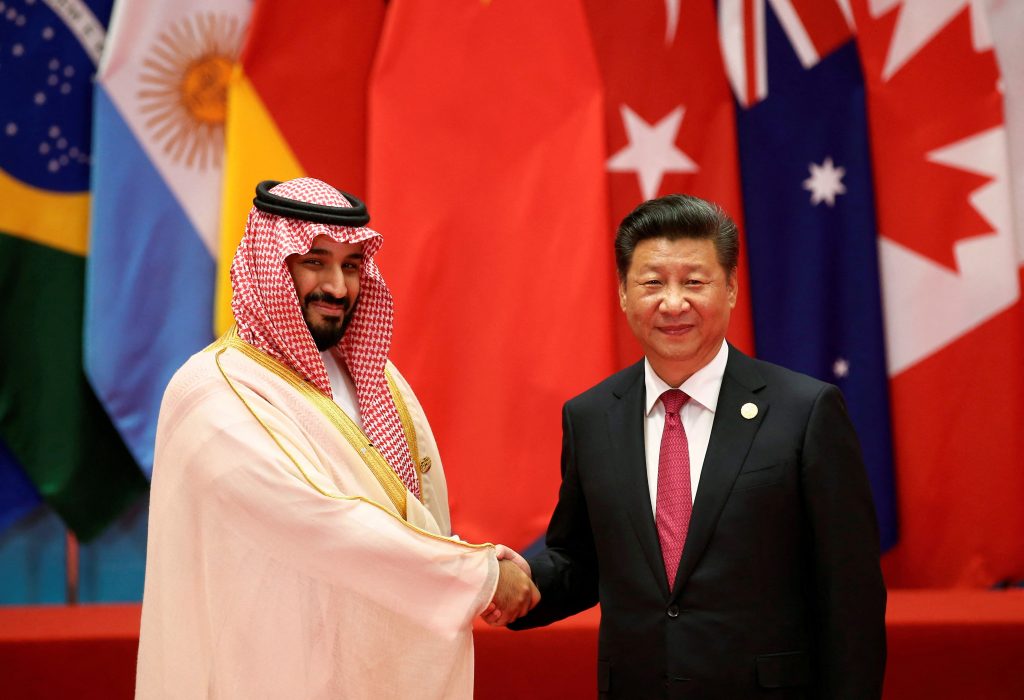
After the signing of the defence agreement, Pakistan’s state television showed Prime Minister Shehbaz Sharif and Saudi Crown Prince Mohammed bin Salman smiling and hugging each other. Media reports said that Pakistan’s army chief, Field Marshal Asim Munir, was also present at the event. Munir, often described as the most powerful man in Pakistan, is believed to be the key figure behind this deal. Analysts say he understands that Pakistan’s army alone cannot defeat India, so he is trying to bring Saudi Arabia in as a strong security partner and source of pressure on New Delhi.

Thousands evacuated in Hong Kong after 1,000-pound WWII bomb discovered– www.foxnews.com
Source Link
Excerpt:

Thousands of people were forced to evacuate a bustling neighborhood of Hong Kong overnight while experts sweated through the delicate work of defusing an undetonated nearly 5-foot, 1,000-pound bomb left over from World War II.

The U.S.-made bomb was found at a construction site in Quarry Bay on Hong Kong’s west side overnight Friday, and it isn’t the first bomb from the war to be found on the island.

“We have confirmed this object to be a bomb dating back to World War II,” Andy Chan Tin-Chu, a police official, told reporters. He said because of “the exceptionally high risks associated with its disposal,” approximately 1,900 households involving 6,000 individuals were “urged to evacuate swiftly.”

TikTok’s Algorithm Will Soon Be “Controlled By America” – Mother Jones– www.motherjones.com
Source Link
Excerpt:

After years of bipartisan warnings about TikTok’s potential national security risks, users may soon confront a different kind of threat, perhaps even worse: an algorithm “controlled by America.”

White House press secretary Karoline Leavitt confirmed the detail on Saturday, a key aspect of the emerging agreement announced by the Trump administration last week between the United States and China. The deal could finally settle TikTok’s fate in the US following months of uncertainty with a brief ban, reversal by the Trump administration, and shifting, self-imposed deadlines for an agreement.

“There will be seven seats on the board that controls the app in the US, and six of those seats will be Americans,” Leavitt told Fox News. “The data and privacy will be led by one of America’s greatest tech companies, Oracle, and the algorithm will also be controlled by America.”

It’s unclear what exactly a US-controlled algorithm will involve. Right-wing conspiracy theories? Charlie Kirk memorials? Coupons for MAGA swag? Nor did Leavitt specify which American individuals would be involved in determining an algorithm. We also have little details on how Oracle CEO Larry Ellison, a Trump loyalist, intends to approach the responsibility for managing TikTok’s data and security while the Trump administration weaponizes everything from voting data to confidential Social Security records.

China’s Gap Between Rhetoric and Action Perpetuates Status Quo in Gaza– chinadigitaltimes.net
Source Link
Excerpt:

On Monday, Reuters reported on the story of a man who tried to flee Gaza by crossing the border into Egypt and then flying to China in order to seek asylum, only to be denied and sent back. As his case illustrates, China’s well-known rhetorical support for Gaza has in many ways not translated into concrete action. In fact, China has appeared to soften its stance towards Israel over the past year. Its criticism over what a U.N. Commission of Inquiry described this week as genocide is directed more at the U.S. and other Western states that undergird Israel’s campaign, rather than at Israel itself. This selectivity serves to undermine the U.S.’ standing relative to China in the eyes of some other countries, while preserving China’s interests in Israel. However, Israel’s increasingly aggressive actions—including recently bombing Qatar’s capital—risk finally pushing Beijing to adopt a more confrontational stance backed by material consequences.

As Youth Unemployment Hits New High, China Waxes Nostalgic for the “Boom Years”– chinadigitaltimes.net
Source Link
Excerpt:

China’s National Bureau of Statistics published new data on Wednesday showing that urban youth unemployment rose to a two-year high last month. According to the data, the rate of unemployed youth aged 16 to 24 (excluding students) rose from 17.8 percent in June to 18.9 percent in August, nearing the historical peak of 21.3 percent in June 2023. This development underscores how even in a country that censors and “optimizes” negative data, a harsh economic landscape continues to frustrate millions of Chinese youth.

After the peak in 2023, government officials suspended the publication of youth unemployment data for several months and revised their methodology to yield lower figures. Articles discussing the state of the Chinese economy have also been censored online, including one on WeChat from March titled “Ten Questions About the Chinese Economy in 2025,” and a similar list of ten economic questions in 2023. A meme comparing masses of youth at a job fair to the Terracotta Warriors was likewise taken down from the internet in May. Upon hearing about the latest youth unemployment figures, Chinese netizens on Weibo and X joked about the sensitivity and unreliability of such statistics, as documented by CDT Chinese editors:

Stream2024: Great news! Another record high!

Nvidia CEO Huang caught between US, China’s ‘larger agendas’– www.channelnewsasia.com
Source Link
Excerpt:

“Jensen Huang’s diplomatic comment about ‘larger agendas’ is CEO-speak for ‘We’re pawns in a digital Cold War,’” said Michael Ashley Schulman, chief investment officer at Running Point Capital Advisors.

Nvidia has responded to the political tumult by sharply increasing its lobbying spending in Washington. Senate disclosures show it spent nearly US$1.9 million in the first half of 2025, compared with US$640,000 for all of last year. It also hired three new firms with 21 lobbyists last month.

China’s Cyberspace Administration directed ByteDance and Alibaba to terminate RTX Pro 6000D testing and orders, the Financial Times reported, citing three sources. The new restrictions go beyond earlier guidance that focused on the H20 chip, designed specifically for the Chinese market.

“We’ll continue to be supportive of the Chinese government and Chinese companies as they wish,” Huang said in London.

Nvidia CEO disappointed after reports China has banned its AI chips– www.cnbc.com
Source Link
Excerpt:

Nvidia CEO Jensen Huang has weighed in on the U.S. tech giant’s struggles in China after a report claimed the country has banned its artificial intelligence chips.

Huang said he was “disappointed” after the Financial Times on Wednesday reported that the Cyberspace Administration of China had ordered companies including TikTok parent company ByteDance and Alibaba not to buy Nvidia’s RTX Pro 6000D, a chip that was made for the country.

In response to a question on the FT report, Huang said Wednesday that “we can only be in service of a market if the country wants us to be.”

“We probably contributed more to the China market than most countries have. And I’m disappointed with what I see,” Huang said. “But they have larger agendas to work out between China and the United States, and I’m understanding of that.”

It comes after a tumultuous few years for Nvidia’s business in China, which Huang described as “a bit of a roller coaster.”

“We’ve guided all financial analysts not to include China” in financial forecasts, Huang told reporters Wednesday at a press briefing in London. “The reason for that is because that’s largely going to be within the discussions of the United States government and Chinese government.”

International Students in China Complain, “Quark AI Has Forgotten Us!”– chinadigitaltimes.net
Source Link
Excerpt:

Some international students in China have taken to social media platform RedNote (Xiaohongshu) to complain about being excluded from obtaining free educational accounts for Quark AI, an LLM tool widely used by their Chinese university classmates. Using the hashtag #WeStudyInChina, these students have also set up an online “message wall” to lobby for inclusion in the popular AI tool.

Chinese online reactions to the students’ pleas ranged from sympathy to amusement, Schadenfreude to national pride. Some commenters highlighted the perceived privileges enjoyed by exchange students in China, while others pointed to the clamor for Quark AI as a sign that Chinese AI tools have finally become cutting edge. Others noted the similarities between these recent “Quark AI refugees” and the millions of so-called “TikTok refugees” who joined RedNote earlier this year when a U.S. ban on TikTok seemed imminent. (After U.S.-China bilateral trade talks in Spain this weekend, U.S. Treasury Secretary Scott Bessent said that the two nations had reached a framework deal to divest TikTok’s ownership from Chinese parent company Bytedance.)

In a recent WeChat article titled “As International Students in China Are Reduced to ‘Quark AI Refugees,’ Should We Gloat, or Feel Proud?” blogger Xiang Dongliang discusses various aspects of the controversy, including China’s educational subsidies for foreign students, on-campus segregation of Chinese and international students, and the rise of xenophobic attitudes in Chinese society. In the end, Xiang suggests that neither smug nationalism nor petty Schadenfreude is an appropriate reaction to the travails of exchange students in China:

I came across this particularly interesting trending topic: “Quark AI has forgotten us!”

Secrets of Chinese AI Model DeepSeek Revealed in Landmark Paper– www.scientificamerican.com
Source Link
Excerpt:

The success of DeepSeek’s powerful artificial intelligence (AI) model R1 — that made the US stock market plummet when it was released in January — did not hinge on being trained on the output of its rivals, researchers at the Chinese firm have said. The statement came in documents released alongside a peer-reviewed version of the R1 model, published today in Nature.

R1 is designed to excel at ‘reasoning’ tasks such as mathematics and coding, and is a cheaper rival to tools developed by US technology firms. As an ‘open weight’ model, it is available for anyone to download and is the most popular such model on the AI community platform Hugging Face to date, having been downloaded 10.9 million times.

The paper updates a preprint released in January, which describes how DeepSeek augmented a standard large language model (LLM) to tackle reasoning tasks. Its supplementary material reveals for the first time how much R1 cost to train: the equivalent of just US$294,000. This comes on top of the $6 million or so that the company, based in Hangzhou, spent to make the base LLM that R1 is built on, but the total amount is still substantially less than the tens of millions of dollars that rival models are thought to have cost. DeepSeek says R1 was trained mainly on Nvidia’s H800 chips, which in 2023 became forbidden from being sold to China under US export controls.

China Is Determined to Hold Firm Against Trump's Pressure ...

China Is Determined to Hold Firm Against Trump's Pressure ...

Public Opinion Surveys Show Recent Gains for China’s Soft Power– chinadigitaltimes.net
Source Link
Excerpt:

Several public opinion surveys published over the last few months paint a picture of China’s role in the world from the perspective of both Chinese and international respondents. These build on previous surveys from the past year that show how despite polarized views, global attitudes towards China have improved at the expense of the U.S., especially in the Global South. (Meanwhile, polls showing dissatisfaction within China have been censored online.)

One notable survey published this month by Dina Smeltz, Craig Kafura, Yawei Liu, Nick Zeller, and Sam Dong at the Chicago Council on Global Affairs tracked Chinese people’s confidence in China and their desire for their country to play a global leadership role. Conducted between April 25 and June 16, the survey found that a “key difference between Chinese views of Beijing’s role in the world compared to American views of Washington’s role is that China’s public support is widespread across all demographic groups, while the public in the United States is much more fragmented, especially by partisan affiliation.” Here is a summary of the main findings:

Nine in 10 Chinese support their country’s active participation in world affairs (90%).

Part of this enthusiasm stems from a sense that China is a leading power in the world: Large majorities say their country is in at least a somewhat strong position in the world (97%) and expect it to get at least somewhat stronger in the next five years (95%).

Seven in 10 Chinese respondents say China has a unique character that makes it the greatest country in the world (69%) versus three in 10 who say China is no greater than any other country (30%).

While a plurality prefer China play a shared leadership role in the world (48%), four in 10 say it should take a dominant one (41%). One in 10 feel China should play no leadership role (11%). [Source]

Signposts Toward the Future of Indian-Chinese Relations– warontherocks.com
Source Link
Excerpt:

On Aug. 31, Indian Prime Minister Narendra Modi met with Chinese leader Xi Jinping on the sidelines of the Shanghai Cooperation Organization’s annual summit in Tianjin — Modi’s first trip to China in seven years. The meeting highlighted improving relations between the two countries, following a period of intensified tensions during border clashes in 2020. This renewed engagement occurs at a time of unusually high U.S.–Indian tensions, raising concerns in Washington that New Delhi might be leaning more toward China. We asked three experts to identify key indicators that might signify the direction of Indian–Chinese relations over the next few