

- A Feminist Approach to AI in Sub-Saharan Africa • Stimson Center– www.stimson.org
Source Link
Excerpt:Across Africa, AI is being harnessed to achieve positive impacts for marginalized communities. However, while AI can be used for good, some fear it could further marginalize and harm those it is intended to empower. Despite emphasis from both public and private sectors on equality and equity, uncertainty around policy-enabling environments, skills, and resources still presents a bottleneck for building inclusive AI. Though there are promising femtech solutions aimed at addressing specific gender concerns, the question of addressing needs and wants from a feminist approach in AI lingers.
Gender is often still an afterthought when it comes to policy implementation and practice, but there are many initiatives, charters, and agreements in Africa that support equality and aim to eliminate violence against women, combat the disproportionate effect of poverty on women, and support women’s participation in the political and economic spheres. For example, Agenda 2063 promotes gender equality and an engaged, empowered youth. The African Union strategy on Gender Equality and Women’s Empowerment (GEWE) 2018-2028 also aims to strengthen women’s agency in Africa and ensure that women’s voices are amplified and their concerns are fully addressed. The African Charter on Human and Peoples’ Rights on the Rights of Women in Africa similarly requires member states to tackle “all forms of discrimination against women through appropriate legislative measures.”
In Africa, there is a strong normative framework on gender equality and women’s and girls’ rights, and correspondingly, there are some civil or governmental initiatives that support women in national digital transformation policies. In Rwanda, for example, women have become increasingly influential in building national plans for artificial intelligence, and in Kenya, women have impacted the national plan for data uses. However, Africa is still facing challenges in integrating AI and policy. The Oxford AI Worldwide Readiness Index exemplifies the gap between the United States, ranked as first, and Mauritius, considered the African flagship country in AI policy, ranked 69th. There are only four African countries – Mauritius, South Africa, Rwanda, and Egypt – whose scores were higher than the global average of 47.59.
Policy efforts across the continent are increasing but still limited. In mid-2021, Egypt launched its national AI strategy, christened “Artificial Intelligence for Development and Prosperity,” making clear the country’s ambitious goals for development and economic growth. Senegal followed suit in 2023 with a strategy of its own, also focused on economic development. On April 20, 2023, Rwanda released its “National AI Policy for Responsible AI Adoption,” which emphasizes AI for sustainable development. In 2024, Kenya published its draft national AI strategy with goals including social inclusion, ethics, and equity in AI.
Africa Watch
Somali Forces Kill Seven Al-Shabab Militants After Six-Hour Siege At Mogadishu Prison – Arise News
Source Link

Morocco pledges reforms as death toll from anti-government protests rises to three– www.euronews.com
Source Link
Excerpt:
Morocco’s government said on Thursday that it would address grievances fuelling youth-led protests, a day after security forces killed three people during the unrest.
Prime Minister Aziz Akhannouch said he was saddened by the deaths, praised law enforcement for its efforts to maintain order and indicated that the government was prepared to respond favourably to the protestors demanding better public healthcare and education.
Speaking before a council of government ministers, he did not detail the reforms under discussion, but said he was “ready for dialogue and debate within institutions and public spaces.”
“The approach based on dialogue is the only way to deal with the various problems faced by our country,” Akhannouch said.
Authorities updated the death toll from this week’s unrest to three on Thursday, saying that armed rioters had stormed public buildings and disrupted public order as the youth-led anti-government demonstrations showed few signs of abating.
Protests about Morocco’s spending on World Cup over schools and hospitals spiral toward destruction – AP News
Source Link
Behind the Gen Z protests that forced Madagascar’s president to sack his government– www.yahoo.com
Source Link
Excerpt:
Thousands of people in Madagascar have taken to the streets in different parts of the country for the past week in the largest wave of protests the Indian Ocean island nation has witnessed in more than 15 years.
What began as anger over shortages of basic necessities has rapidly escalated into one of the most serious challenges facing President Andry Rajoelina, who has been in power, for the second time, since 2018. On Monday, in response, he sacked his government but that did not placate the protesters.
At least 22 people have been killed and more than 100 others injured in the unrest, according to the UN, although the Malagasy government has dismissed those figures and described them as based on “rumours and misinformation”.

After Nepal’s government was felled by a Gen Z protest, the countries in the region have grown nervous, especially China. Now, the Gen Z revolution has spread, but not in the same region. This revolution happened in Madagascar. Madagascar youth began protests that have only been building, holding signs that say “We want to live, not survive.”
In response to the protests, Madagascar’s President, Andy Rajoelina, has dissolved the government, saying in his dissolution announcement, “We acknowledge and apologise if members of the government have not carried out the tasks assigned to them.” Shortly afterwards, the military turned on the President, causing him to leave the country out of fear for his life.
Madagascar Government Dissolved After Gen Z Riots – Freedomist
Source Link
Excerpt:
After Nepal’s government was felled by a Gen Z protest, the countries in the region have grown nervous, especially China. Now, the Gen Z revolution has spread, but not in the same region. This revolution happened in Madagascar. Madagascar youth began protests that have only been building, holding signs that say “We want to live, not survive.”
Madagascar president has left the country after soldiers turned against him, lawmaker says Goshen News
Madagascar President Andry Rajoelina said he has fled the country in fear for his life following a military rebellion but did not announce his resignation in a speech broadcast on social media late Monday from an undisclosed location.
Rajoelina has faced weeks of Gen Z-led anti-government protests, which reached a pivotal point on Saturday when an elite military unit joined the protests and called for the president and other government ministers to step down. That prompted Rajoelina to say that an illegal attempt to seize power was underway in the Indian Ocean island and leave the country.
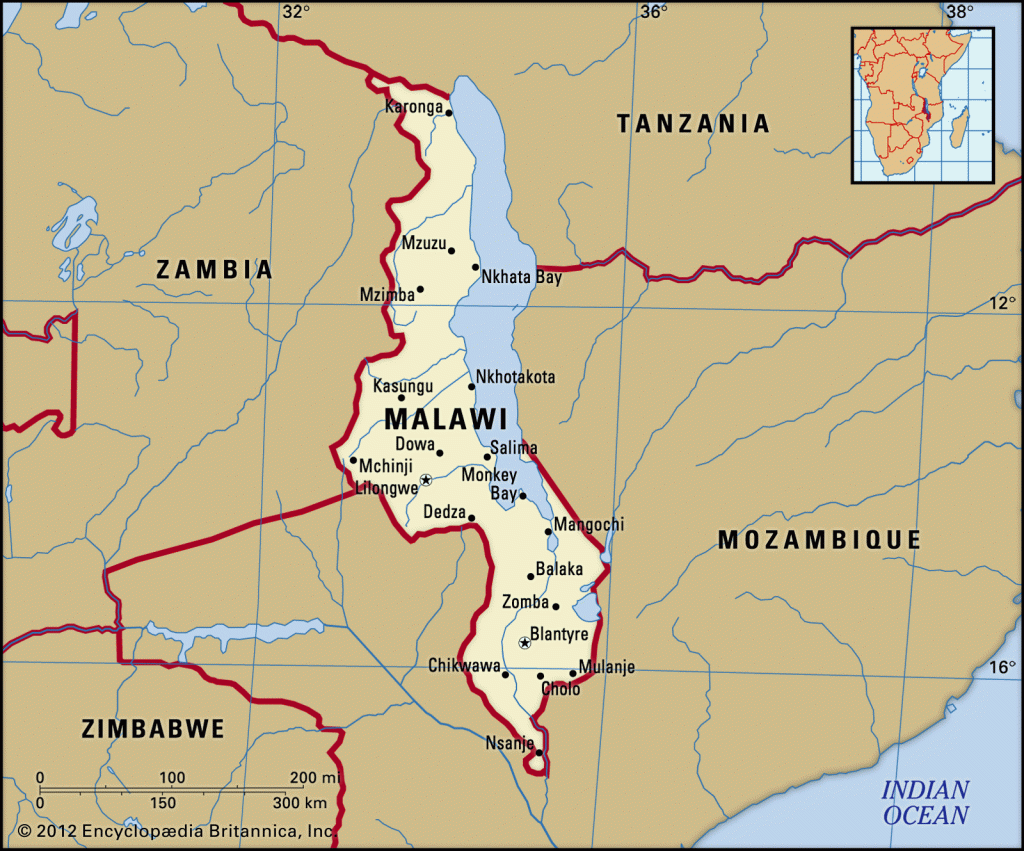
Malawi’s electoral commission warns parties of Lazarus Chakwera and Peter Mutharika not to declare victory– www.bbc.com
Source Link
Excerpt:
The head of Malawi’s electoral commission has warned political parties not to prematurely declare electoral victory, saying they should wait for the official results.
Annabel Mtalimanja’s warning came after the parties of the two main presidential candidates, the incumbent Lazarus Chakwera and his predecessor Peter Mutharika, claimed they had won Tuesday’s poll.
Speaking at a press conference on Thursday, Ms Mtalimanja said that only the commission was mandated to release results.
Malawians have been eagerly awaiting results, but the commission has not yet released any – despite the fact that nearly all votes have been counted.
The commission is expected to announce the outcome only after all votes have been tallied and verified in order to avoid the possibility of the final result being challenged.
A candidate needs to win more than 50% of the vote, or a run-off is held.

Nigeria: Report shows that 100 churches are attacked every month and 32 Christians are killed every day in the country – ZENIT – English
Source Link
Excerpt:
A new report from Nigeria has cast a stark light on the relentless wave of anti-Christian violence sweeping across the country, revealing that roughly one hundred churches are destroyed every month. The figures, compiled by the International Society for Civil Liberties and Rule of Law (Intersociety), suggest that the world’s most populous African nation has witnessed nearly 19,100 churches attacked, looted, or shuttered since 2009.
That year marked the rise of Boko Haram, the Islamist insurgency whose campaign for a caliphate in the Sahel ignited one of the most brutal chapters in Nigeria’s modern history. Since then, extremist factions — including Boko Haram, ISIS-West Africa, and armed Fulani herders — have left a devastating trail of burned sanctuaries, massacred congregants, and shattered communities. For Emeka Umeagbalasi, the Catholic-inspired human rights advocate who leads Intersociety, the statistics are not abstract but a portrait of survival.
“A church does not simply close itself,” he told reporters. “It takes violence, intimidation, or bloodshed to empty a parish. When we counted every church that had been abandoned or destroyed, the figure reached 19,100. That is one hundred every month, three every single day, for sixteen years.”
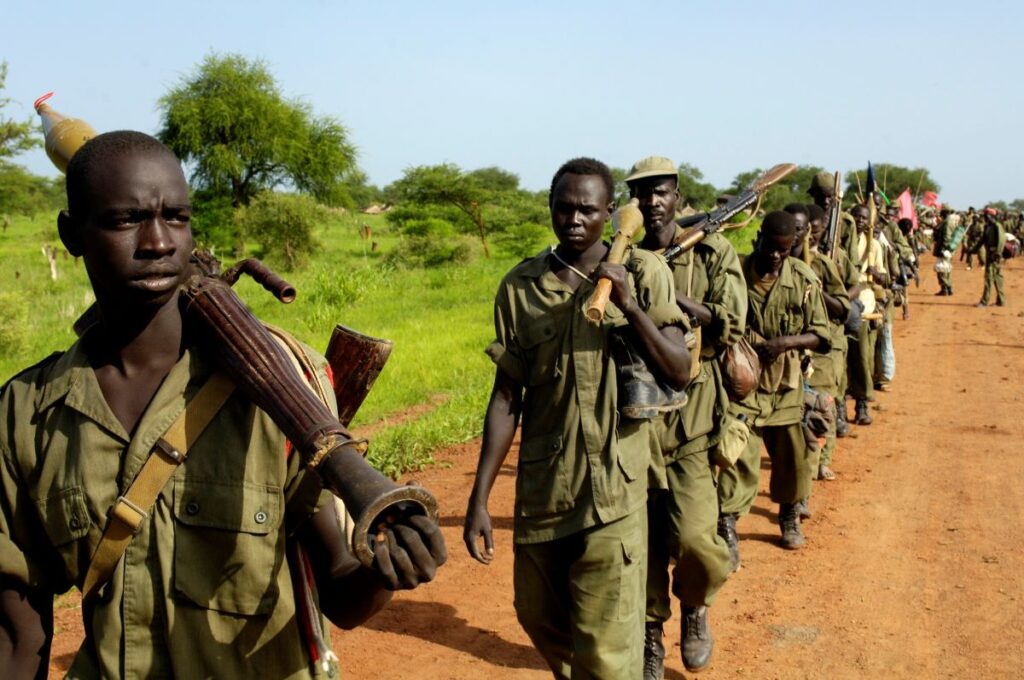
Drone strike on Sudan mosque kills at least 70, army blames paramilitary group – The Business Standard
Source Link
Polls open in Guinea in a referendum that could allow junta leader to run for president– abcnews.go.com
Source Link
Excerpt:
CONAKRY, Guinea — Polls opened in Guinea on Sunday for a referendum that could allow the leader of the country’s junta to run for the presidency and is being closely watched in the coup-battered region.
Citizens of this coastal West African country are casting their ballots in favor or against a new draft constitution, the key step in the country’s transition from military rule to civilian rule. Elections are expected to follow in December.
Guinea is one of a growing number of West African countries, including Mali, Niger and Burkina Faso, where the military has taken power and delayed a return to civilian rule. Critics say Sunday’s referendum is a way for Gen. Mamadi Doumbouya, who ousted President Alpha Conde in 2021, to seek the presidency and legitimize his military rule.
There are 6.7 million eligible voters and the referendum needs a voter turnout of at least 50% to pass.
Polls opened at 7 a.m. local time and are expected to close at 6 p.m.
In the last days of the campaign, Conakry, Guinea’s capital, was buzzing with activity. There were Quran readings, reggae concerts and prayers held in support of Doumbouya. Supporters wearing T-shirts and boubous — traditional West African flowing garments — printed with Doumbouya’s face, gathered at neighborhood rallies. Only one thing was missing: the opposition.
Malawi’s ex-president Mutharika takes early lead in election – Club of Mozambique
Source Link
‘Children are bound to die’: Corruption, aid cuts and violence fuel a hunger crisis in South Sudan – cbs4indy.com
Source Link
China’s Growing Influence on South African Platinum Mining Industry – Discovery Alert
Source Link
France suspends anti-terrorism cooperation with Mali after diplomat’s arrest – inkl
Source Link
Guinea to vote on constitution that would let coup leader run for office – The Straits Times
Source Link
Church leaders in South Sudan say peace process is fragile – World Council of Churches
Source Link

Sudan war: Torture, rape and forced starvation as paramilitaries suffocate besieged city | World News– news.sky.com
Source Link
Excerpt:
The battle for Al Fashir – and Sudan
Al Fashir is being suffocated to death by the paramilitary Rapid Support Forces (RSF) as they push to claim full control of the Darfur region as a base for their parallel government, after the military recaptured the capital Khartoum and other key sites in central Sudan.
Close to a million people are facing famine in Al Fashir and surrounding camps as the RSF enforces a full blockade, launching armed attacks on volunteers and aid workers risking their lives to bring in food.
Inside the city, thousands are bombarded by almost daily shelling from surrounding RSF troops.
The RSF have physically reinforced their siege with a berm – a raised earth mound. First spotted by Yale Humanitarian Research Lab, the berm is visible from space.
China Launches Coordinated Media Campaign to Promote New Global Governance Initiative in Africa – The China-Global South Project
Source Link
Rwanda’s proxy invasion of DR Congo through “rebels” is accelerating after an attack in the eastern Congo leaves 141 mostly Hutus dead. The Rwandan-backed group M23 allegedly conducted the attack. These Hutus are the same Hutus that escaped to the Congo after the Rwandan Genocide that saw their tribe kill 800,000 Tutsis.
At least 140 killed by Rwanda-backed rebels in eastern DR Congo, rights group says– www.france24.com
Source Link
Excerpt:
Human Rights Watch said 141 people, predominantly Hutus, were feared to have been killed in eastern Congo in July in attacks believed to have been carried out by the Rwanda-backed M23 group, the most prominent of the armed groups fighting for control of the region.

Source Link
Excerpt:
Christians in Nigeria have faced sporadic persecution since the 1950s, but the past 25 years have seen a wave of violence that is swiftly becoming a slow-motion genocide. Despite that, the international community has for the most part turned a deliberate blind eye on the weekly killings; when pressed for comment, everything from conflicts over grazing land to climate change have been cited as the real reasons behind the ongoing persecution.
Persecution of Christians in Nigeria began to spike after 1999, when 12 northern states adopted Sharia law; the rise of the terrorist group Boko Haram in 2009 marked a dramatic escalation. Famously, Boko Haram kidnapped hundreds of schoolgirls in 2014. Christian girls were targeted for forced conversion and marriage to Muslim fighters; 87 of the girls are still cited as “missing” 11 years later.
More than two years into the civil war, the Sudanese paramilitary group is attempting to gain recognition of their “government” in regions they control, one the UN Security council has rejected.
The UN Security council “unequivocally reaffirmed” the sovereignty of Sudan, including its estranged government. The 15-member council warned the decision to legitimize the paramilitary group will lead to “fragmenting the country and worsening an already dire humanitarian situation.”
UN rejects plans by Sudan’s paramilitary group for a rival government amid civil war – Imperial Valley Press Online
Excerpt:
The U.N. Security Council on Wednesday rejected plans by Sudan’s paramilitary group to establish a rival government in areas it controls, warning that the move threatens the country’s territorial integrity and risks further exacerbating the ongoing civil war.
The strongly worded statement by the U.N.’s most powerful body “unequivocally reaffirmed” its unwavering commitment to Sudan’s sovereignty, independence and unity. Any steps to undermine these principles “threaten not only the future of Sudan but also the peace and stability of the broader region,” the statement said.
The 15-member council said the announcement by the paramilitary Rapid Support Forces also risks “fragmenting the country and worsening an already dire humanitarian situation.”
Sudan plunged into conflict in mid-April 2023, when long-simmering tensions between its military and paramilitary leaders broke out in the capital, Khartoum, and spread to other regions, including western Darfur. Some 40,000 people have been killed, nearly 13 million displaced and many pushed to the brink of famine, U.N. agencies say.
The RSF and their allies announced in late June that they had formed a parallel government in areas the group controls, mainly in the vast Darfur region where allegations of war crimes and crimes against humanity are being investigated.
The deputy prosecutor of the International Criminal Court said last month that the tribunal believes war crimes and crimes against humanity are taking place in Darfur, where the RSF controls all regional capitals except el-Fasher in North Darfur.
The Security Council reiterated that its priority is a resumption of talks by both parties to reach a lasting ceasefire and create conditions for a political resolution of the war, starting with a civilian-led transition that leads to a democratically elected national government.
Council members recalled their resolution adopted last year demanding that the RSF lift its siege of el-Fasher, “where famine and extreme food insecurity conditions are at risk of spreading.” They expressed “grave concern” at reports of a renewed RSF offensive on the besieged city.
Source Link
Excerpt:
Al Fashir is being suffocated to death.
The paramilitary Rapid Support Forces (RSF) has held the capital of North Darfur hostage in a 14-month siege – blocking food or fuel from entering the locality and forcing starvation on its 900,000 inhabitants.
The entire city is currently a militarised zone as Sudan‘s army and the Darfur Joint Protection Force fend off the RSF from capturing the last state capital in the Darfur region not currently under their control.
Rare footage sent to Sky News from inside al Fashir town shows streets emptied of cars and people.
The city’s remaining residents are hiding from daytime shelling inside their homes, and volunteers move through town on donkey carts distributing the little food they can find.
Source Link
Excerpt:
The treason trial of the former president of the Democratic Republic of Congo, Joseph Kabila, has begun in a military court in the capital, Kinshasa.
He also faces other charges, such as murder, linked to his alleged support for M23 rebels – who control a large part of the mineral-rich east of the country. He denies the charges and has snubbed the hearing.
Kabila’s successor, President Félix Tshisekedi, has accused him of being the brains behind the rebels.
The former president has rejected the case as “arbitrary” and said the courts were being used as an “instrument of oppression”.
A ceasefire deal between the rebels and the government was agreed last week, but fighting has continued.
Kabila had been living outside the country for two years, but arrived in the rebel-held city of Goma, in eastern DR Congo, from self-imposed exile in South Africa in May.

