March 11, 2026

Asteroid Watch

Blurb:

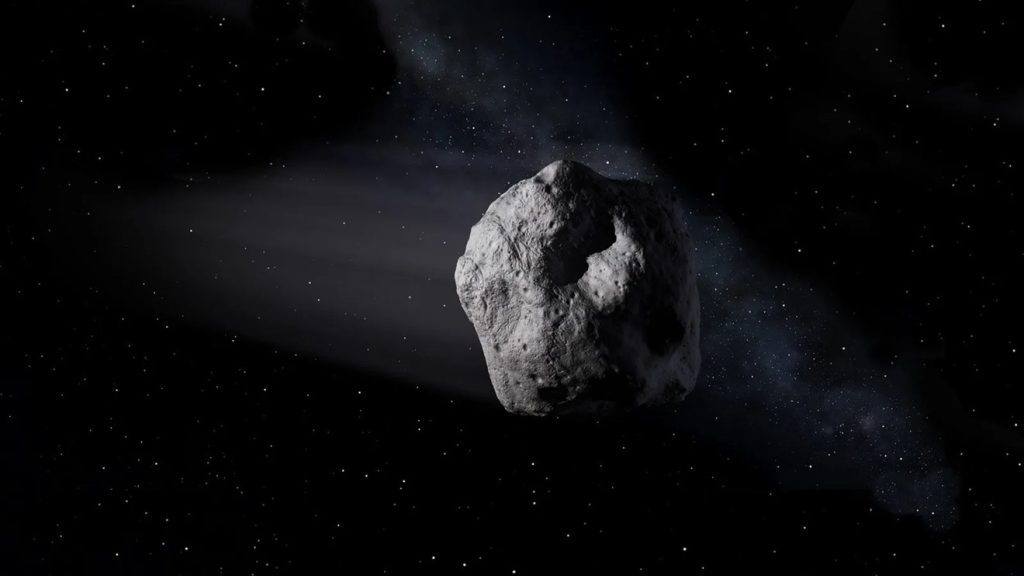
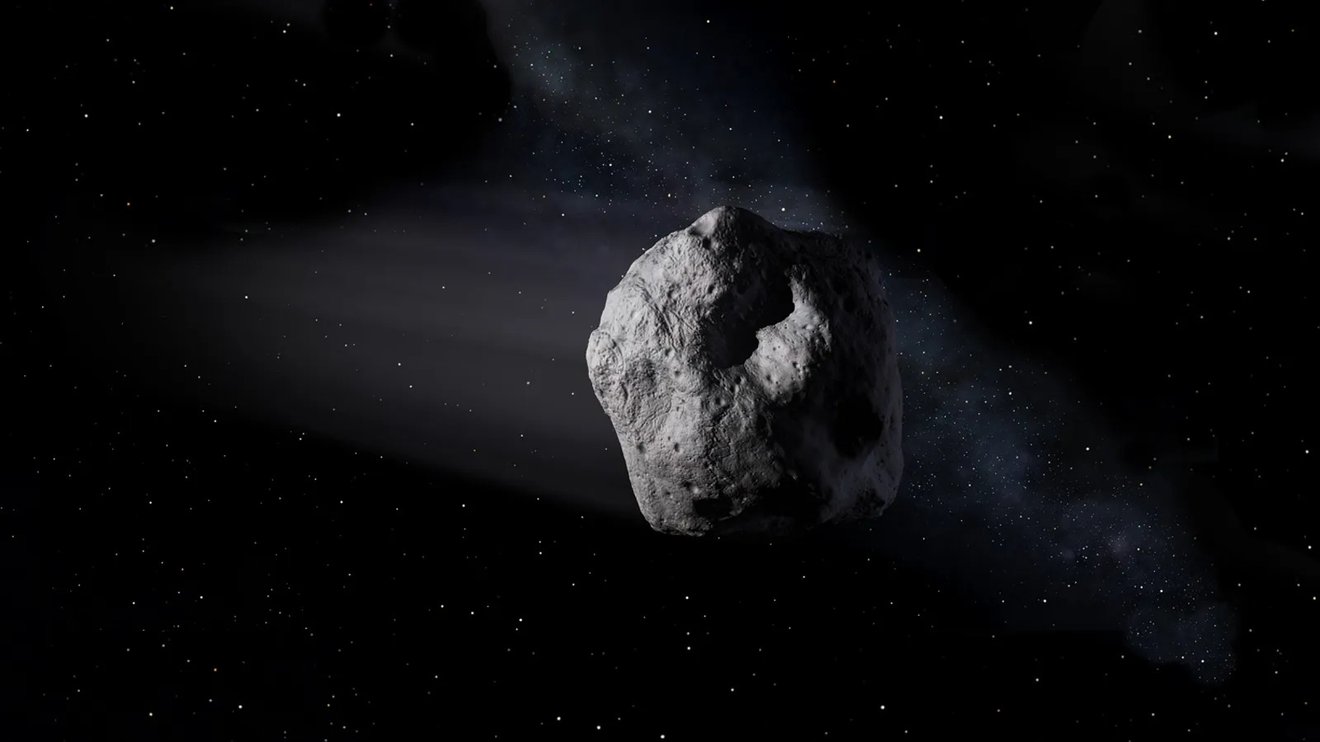
Of all the asteroids that have imperiled the planet, 2024 YR4 is unparalleled. Soon after it was spotted in December 2024, worldwide telescopic observations quickly positioned it as the most dangerous space rock ever discovered—one that stood a 3.1-percent (or 1-in-32) chance of crashing into Earth on December 22, 2032. If it were to hit one of the cities potentially in its path, this 60-meter asteroid would have unleashed a force comparable to several atomic bombs, devastating the unfortunate metropolis.

An Earth impact was eventually ruled out in February of last year. But a late plot twist revealed 2024 YR4 stood a 4.3-percent (1-in-23) chance of slamming into our moon on the same date. Now, a concerted effort by astronomers indicates the asteroid will comfortably miss our alabaster companion too—by 21,200 kilometers.

Blurb:

Asteroids spin. Most of them do so rather slowly, and up until now most theories of asteroid rotation have failed to explain exactly why. A new paper from Wen-Han Zhou at the University of Tokyo and his co-authors might finally be able to fully explain that mystery as well as a few others related to asteroid rotation. Their work was presented at the Joint Meeting of the Europlanet Science Congress and the American Astronomical Society’s Division for Planetary Science in late September and could impact our understanding of how best to defend against a potentially hazardous asteroid.

The key to the paper was the release of a new data set from Gaia, the galaxy mapping mission launched by ESA. As part of its third data release (DR3), it also captured data on thousands of asteroids. Some of these “tumble” by rotating around something other than their principal axis, but others do “spin” around their largest axis. Why some spin and some tumble wasn’t explained by current asteroid rotation models either. Neither was the overabundance of “slow rotators” whose rotational period was much slower than predicted in traditional models.

Blurb:


One week ago, an asteroid flew so close to Earth that it nearly broke the record for the closest asteroid approach ever.

This space surprise came to astronomers’ attention on Wednesday, October 1, 2025, when the Catalina Sky Survey in Arizona spotted an asteroid named 2025 TF a few hours after it had passed Earth. Flying over Antarctica, the asteroid came a mere 428 kilometers (266 miles) from Earth’s surface. For reference, the International Space Station orbits our planet at a similar altitude, approximately 370 km to 460 km (254 miles).

Asteroid 2025 TF may have only amounted to a near miss, but keeping tabs on near-Earth objects like this — even if most miss Earth — is a never-ending responsibility for astronomers.

NASA alert! Giant house-sized asteroid 2025 SA3 set to zoom past Earth at 18,000 mph; here’s what you need to know |– timesofindia.indiatimes.com
Source Link
Excerpt:

The night sky has long fascinated humanity, offering both beauty and mystery. Occasionally, it delivers something far more extraordinary—like an asteroid making its way toward Earth. On September 30, 2025, NASA confirmed that asteroid 2025 SA3, a space rock measuring about 54 feet (16.5 meters) in diameter, is traveling on a trajectory that will bring it relatively close to our planet. Moving at 18,073 miles per hour (29,080 km/h), this asteroid has captured the attention of scientists, astronomers, and the public alike.While 2025 SA3 is not large enough to threaten Earth, its approach serves as a reminder of the dynamic nature of our solar system and the importance of monitoring near-Earth objects (NEOs). Observing such asteroids allows scientists to refine orbital predictions, study their composition, and prepare for potential future encounters.
Study Finds Earth's Small Asteroid Visitor Likely Chunk of Moon ...

Study Finds Earth's Small Asteroid Visitor Likely Chunk of Moon ...

City-killer asteroid 2024 YR4’s chances of hitting Earth increase; NASA releases likely impact zone list–Check if you are in danger? – MSN
Source Link
Excerpt:

A newly discovered asteroid, 2024 YR4, has raised concerns among astronomers after NASA confirmed its growing probability of colliding with Earth. Originally detected on 27 December 2023 by the El Sauce Observatory in Chile, the space rock has a 3.1% chance of impact on 22 December 2032—the highest probability ever recorded by modern forecasting systems.

The asteroid, measuring between 130 and 300 feet wide, is comparable in size to the Statue of Liberty. Though not large enough to cause global devastation, scientists warn it could destroy a city if it strikes. With a velocity nearing 40,000 miles per hour, an impact could unleash energy equivalent to eight megatons of TNT—500 times more powerful than the Hiroshima bomb.

NASA and the European Space Agency (ESA) are closely tracking 2024 YR4’s trajectory. The ESA currently places the impact probability at 2.8%, slightly lower than NASA’s estimate.

“This is not a crisis at this point in time,” said Richard Moissl, head of ESA’s planetary defence office. “This is not the dinosaur killer. This is not the planet killer. This is at most dangerous for a city.”

The International Asteroid Warning Network (IAWN) first issued a warning memo on 29 January, after the probability of impact surpassed 1%. Since then, astronomers have been refining calculations as more data becomes available. Some experts believe further observations could reduce the risk to zero, as has happened with previous asteroids.

Chinese scientists unveil blueprint for asteroid defense and resource utilization, call for int’l collaboration– financialpost.com
Source Link
Excerpt:

In a sub-forum of this conference, the Deep Space Exploration Lab highlighted ten major sectors as the future trends of deep space economy, including resource utilization, internet, energy, biology, transportation, smart technologies, construction, tourism, security, and cultural creativity.

Source Link
Excerpt:

Earth is about to witness a close celestial visitor as asteroid 2025 OL1 approaches our planet. Roughly the size of a small aircraft, measuring about 110 feet in diameter, this space rock will make its closest pass on July 30, 2025. Travelling at an impressive speed of 16,904 miles per hour, it will safely skim past Earth at a distance of approximately 1.29 million kilometres. Though this event may sound alarming, NASA assures that the asteroid poses no threat. This flyby underscores the critical need for continuous monitoring of near-Earth objects and the evolving strategies by agencies like NASA and ISRO to defend our planet.

NASA tracks asteroid 2025 OL1 for closest pass on July 30: Speed and distance

At roughly 110 feet in diameter, asteroid 2025 OL1 is about the length of a small passenger plane. Moving at a rapid speed of nearly 17,000 miles per hour, it covers the vast distance between Earth and its orbit quickly but safely. Although over a million kilometres away at closest approach, this flyby is significant because it offers scientists a chance to study an asteroid up close, better understand its trajectory, and refine detection techniques for future near-Earth objects.

Source Link
Excerpt:

In just a few days, an asteroid the size of an airplane will pass by Earth, but there’s no need to ring the alarm bells. That’s because the asteroid, named 2025 OW, is sure to miss our planet as it makes its closest approach on Monday, July 28, 2025.

While some may break out in a cold sweat hearing about a passing asteroid, astronomers are almost never flustered by this kind of event. With the help of data collected by observatories, they know that 2025 OW — and thousands of other asteroids coursing through space right now — pose no threat to our planet. Even though 2025 OW won’t impact Earth, the need to keep a close eye on similar asteroids remains a round-the-clock priority. 

An Asteroid Approach Forecast

It should come as comforting news that asteroid approaches happen all the time with no repercussions. In fact, multiple asteroids are approaching within the next week. But with the exception of 2025 OW, they’ll all be more than a million miles away from Earth. Also, none of the asteroids are large enough to raise concern. 

Source Link
Excerpt:

Asteroid 2022 YS5 is a building-sized asteroid that is scheduled to make a close approach to Earth on July 17, capturing the attention of astronomers, scientists, and space agencies worldwide. Although the asteroid is expected to fly past Earth at a safe distance, the event underscores the increasing importance of planetary defense systems, ongoing asteroid monitoring, and global cooperation in space. Both NASA and the Indian Space Research Organisation (ISRO) have confirmed that 2022 YS5 poses no threat, but are treating this event as a timely reminder of the need for continued vigilance and preparedness.

The National Aeronautics and Space Administration (NASA) has officially confirmed that asteroid 2022 YS5, measuring approximately 120 feet (36.5 meters) in diameter, will pass Earth at a distance of about 4.15 million kilometers (roughly 2.58 million miles). While that may sound like a vast distance, it is considered relatively close in astronomical terms, especially given the asteroid’s speed of over 14,000 miles per hour (22,500 km/h).2022 YS5 belongs to the Aten group of near-Earth asteroids, known for having orbits that can cross Earth’s path. However, NASA has made it clear that this particular asteroid does not qualify as potentially hazardous, as it does not meet the two key risk criteria:

  • Proximity: Within 7.4 million kilometers (4.6 million miles) of Earth
  • Size: Greater than 85 meters in diameter

Since 2022 YS5 falls short on both counts, its flyby is being monitored but not considered dangerous.

Source Link
Excerpt:

Asteroid 2024 YR4:NASA James Webb Space Telescope recent observations reveal the potential that asteroid 2024 YR4 could be a small yet growing risk of collision, despite being no threat to the Moon. The new data reveals the potential danger to the lunar surface, prompting increased scientific interest in the asteroid’s trajectory. The Moon remains under the potential threat of asteroid YR4 while Earth can breathe easy. This underscores the need for continued investment in space observation technologies and planetary defence strategies. According to Space.com reports, as the asteroid reappears in 2028, astronomers will once again study its orbit, ensuring that if a threat ever does emerge, humanity will be prepared.

Asteroid 2024 YR4 poses growing lunar threat, reveals NASA’s James Webb Space Telescope

In May 2025, NASA’s James Webb Space Telescope captured a detailed observation of asteroid 2024 YR4. The space rock, large enough to destroy a city, was last spotted before it disappeared behind the Sun, making this observation humanity’s final view until 2028. According to the reports, the new data has refined predictions about YR4’s path and revealed a 4.3% chance of it colliding with the Moon in 2032. This may seem like a low probability, but it’s worth noting that such figures previously caused concern for Earth when the asteroid was first discovered.

Source Link
Excerpt:

Astronomers have found a cluster of giant asteroids co-orbiting the Sun with Venus—space rocks that might become a long-term hazard for Earth. These are not ordinary asteroids. Sometimes referred to as city killers because of their size, many are bigger than 140 meters; they are big enough to wipe out a whole urban centre upon impact. More concerning is that they can be hidden from our telescopes by the Sun’s intense glare.These so-called co-orbital asteroids don’t move in orbit around Venus but follow similar orbits around the Sun. Out of the 20 discovered to date, there are “Trojan” asteroids, which stay either in front of or behind Venus in its orbit, and a quasi-moon called Zoozve. They are said to have originated from the main asteroid belt between Mars and Jupiter and were later drawn into Venus’s vicinity by gravitational forces.

Source Link
Excerpt:

A massive asteroid named 2025 JR is drawing global attention as it speeds toward Earth for a close encounter. Roughly the size of a 25-storey building, the space rock is set to make its nearest approach on Wednesday, May 28. While it will safely bypass Earth at a distance of 4.6 million kilometers, that proximity is considered unusually close in astronomical terms. The asteroid’s size and speed—combined with its Earth-crossing orbit—have sparked interest among scientists, space agencies, and skywatchers alike. Though there is no risk of collision, the flyby serves as a vivid reminder of how close—and unpredictable—near-Earth objects can be, reinforcing the need for continued monitoring and space preparedness.

On 28 May 2025, Asteroid 2025 JR is set to pass by Earth at 8:40 am IST, which is about 250 feet (76 meters) across, a respectable size in space. It’s an Apollo-class near-Earth object (NEO)—a class marked by asteroids that have orbits that intersect with Earth’s orbit around the Sun. Being of this kind of orbital feature, these asteroids are kept under close watch for how much danger they could pose.The asteroid travels at a staggering 40,800 km/h, a speed that, were it orbiting the Earth, would finish the journey in under an hour. While 2025 JR is not deemed a “potentially hazardous asteroid” because it is below the threshold diameter of 460 feet (140 meters), it is large enough that if it were to strike the Earth, the destruction would be devastating.