July 10, 2026

Sustainable Flourishing

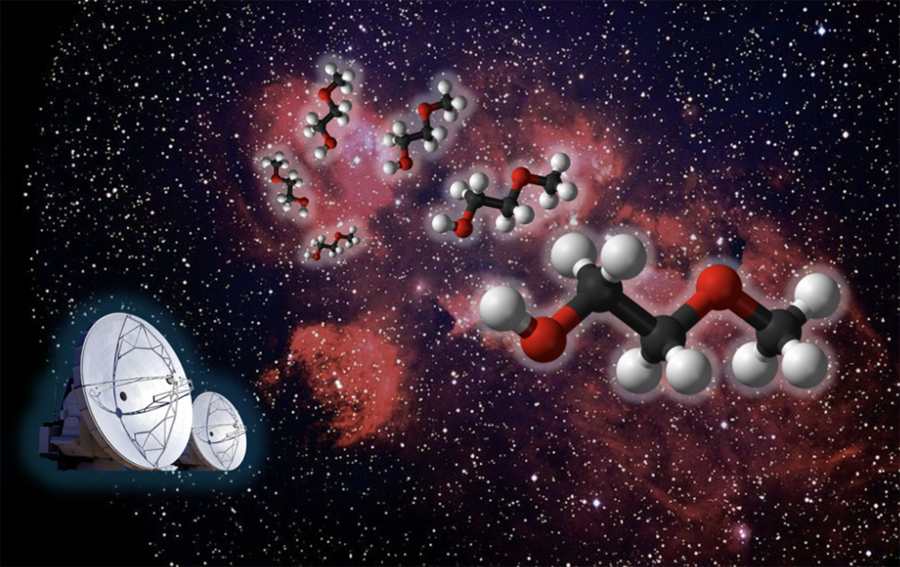
Researchers detect a new molecule in space | MIT News ...

Researchers detect a new molecule in space | MIT News ...Scientists just recreated the Universe’s first molecule and solved a 13-billion-year-old puzzle– www.sciencedaily.com
Source Link
Excerpt:

Immediately after the Big Bang, which occurred around 13.8 billion years ago, the universe was dominated by unimaginably high temperatures and densities. However, after just a few seconds, it had cooled down enough for the first elements to form, primarily hydrogen and helium. These were still completely ionized at this point, as it took almost 380,000 years for the temperature in the universe to drop enough for neutral atoms to form through recombination with free electrons. This paved the way for the first chemical reactions.

The oldest molecule in existence is the helium hydride ion (HeH+), formed from a neutral helium atom and an ionized hydrogen nucleus. This marks the beginning of a chain reaction that leads to the formation of molecular hydrogen (H2), which is by far the most common molecule in the universe.

Recombination was followed by the ‘dark age’ of cosmology: although the universe was now transparent due to the binding of free electrons, there were still no light-emitting objects, such as stars. Several hundred million years passed before the first stars formed.

New biodegradable hydrogel offers eco-friendly alternative to ...

New biodegradable hydrogel offers eco-friendly alternative to ...Scientists make incredible breakthrough with bendable battery that could transform future tech: ‘Overcomes the usual limits’ – Yahoo! Tech
Source Link
Excerpt:

Researchers at the Chinese Academy of Sciences recently completed a study outlining their design and development of a hydrogel electrolyte that uses urea and zinc acetate to enable zinc-ion batteries to bend without losing voltage.

The study, published in the international edition of Angewandte Chemie, sought an alternative to conventional means of improving flexibility.

Quasi-solid-state electrolytes, for instance, encounter limitations in terms of cost, durability, and environmental impact — limitations overcome by the inexpensive, eco-friendly zinc acetate compound.

That’s not to say the researchers faced zero obstacles along the way.

Zinc acetate’s poor solubility, according to a summary published on Tech Xplore, interferes with performance, meaning the researchers needed to cultivate a “salting out” strategy — that is, removing hydration shells around polymer chains — in order to strengthen the electrolyte’s durability.

“This approach overcomes the usual limits of the low-cost [zinc acetate] salt, making it much better at resisting wear and tear,” noted researcher Li Zhaoqian. “It allows the material to withstand repeated processes of zinc plating and stripping, as well as other physical stress, improving its overall durability.”

Zinc-ion batteries are used in a range of applications, from smart technology to electric vehicles and renewable power storage, serving as a much more sustainable alternative to lithium-ion batteries, which tend to be expensive to source and contain hazardous pollutants.


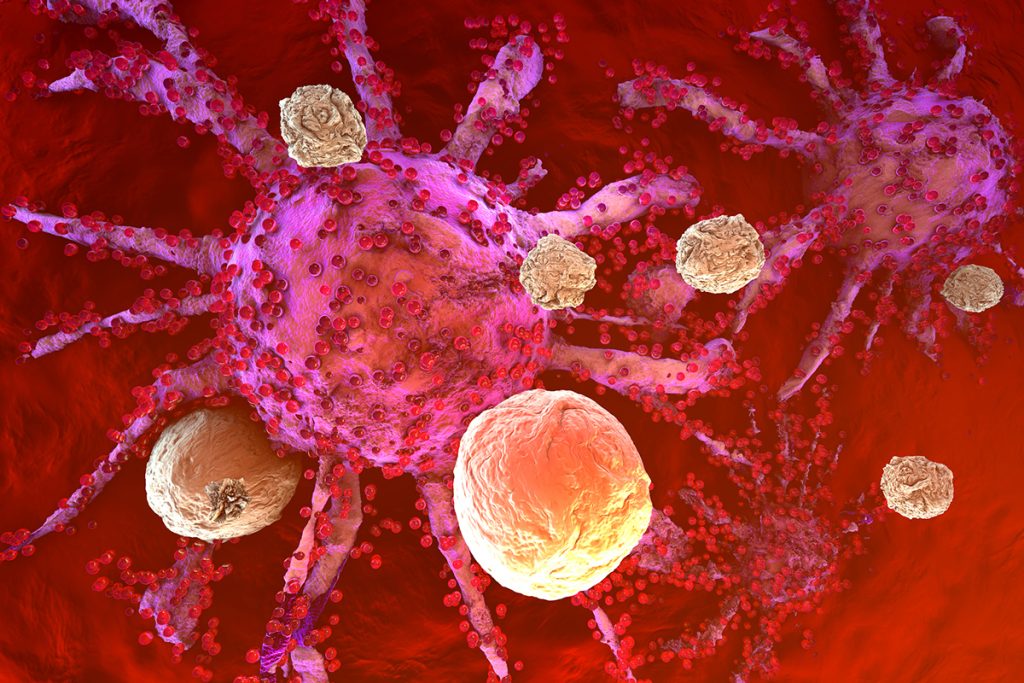
6 Important Parts of the Immune System to Know | Alliance for ...

6 Important Parts of the Immune System to Know | Alliance for ...Breakthrough lung cancer treatment supercharges immune cells with mitochondria– www.sciencedaily.com
Source Link
Excerpt:

While chemotherapy remains a cornerstone of lung cancer treatment, it often weakens the immune system it relies on for long-term control. Now, researchers have found a way to turn this weakness into strength — by transplanting healthy mitochondria into the tumor environment. In advanced non-small cell lung cancer (NSCLC), combining mitochondrial transplantation with cisplatin not only enhanced immune cell infiltration but also reversed tumor metabolism and improved the drug’s effectiveness. This innovative approach transforms mitochondria from mere energy suppliers into active allies in cancer therapy, showing potential to reshape how we treat aggressive lung tumors.

Lung cancer causes more deaths than any other cancer worldwide, with non-small cell lung cancer (NSCLC) accounting for 85% of cases. Chemotherapy is the first-line treatment for advanced NSCLC, yet its effectiveness is hampered by toxic side effects and emerging resistance. Moreover, chemotherapy damages immune cells and reduces their presence in the tumor microenvironment, limiting long-term control. Adding to this challenge, tumors can hijack immune cell mitochondria through nanotube-like structures, further dampening immunity. Immunotherapy has improved outcomes for some, but many patients still fail to respond. Due to these limitations, there is a pressing need for strategies that restore immune power and metabolic balance during chemotherapy.


Exploring the Role of Science Laboratories in Modern Schools

Exploring the Role of Science Laboratories in Modern SchoolsThe cyborg future is coming: Lab-grown humans are being made NOW – The Blaze
Source Link
Excerpt:

Nicole (Shanahan) points to transhumanist companies that are currently manufacturing human eggs in a lab “without any input from a female ovary” and then fertilizing them with either “real sperm or synthetic sperm, which can also be grown.” In other words, pseudo-human beings are being created by machines in laboratories.

Trying to stop this, she says, is “impossible” — as is halting the development of organoids or the implantation of brain chips.

“That leaves us with the fact that the transhumanist cyborg machine human is going to exist,” she says frankly, calling it a new attempt at the age-old ploy to steal the human soul.

“Now is the time that we have this very narrow window to create a fork for the future of humanity,” she tells (Joe) Allen.

As terrifying as sharing the world with transhumanist creations is, Allen says there are two pieces of good news: One, the “god-like” AI we’ve been told is coming down the pike is likely a “sales pitch” that overexaggerates the actual product. Yes, humans will regard these technologies as “digital deities,” and yes, “they [will] have real power,” but they likely aren’t as superhuman as we’ve been told.

Secondly, “if we believe that we are intended to be more human than machine, and if we believe that there are realms far beyond this one to which we’re accountable, then we’re going to fight for it, and it’s going to be across the world,” says Allen.

Source Link
Excerpt:

A research team at the Politecnico di Milano has developed an innovative single-atom catalyst capable of selectively adapting its chemical activity. This is a crucial step forward in sustainable chemistry and the design of more efficient and programmable industrial processes.

The study was published in the Journal of the American Chemical Society, one of the world’s most authoritative scientific journals in chemistry.

This achievement is a breakthrough in the field of single-atom catalysts. For the first time, scientists have demonstrated the possibility of designing a material that can selectively change its catalytic function depending on the chemical environment. It involves a sort of ‘molecular switch’ that allows complex reactions to be performed more cleanly and efficiently, using less energy than conventional processes.

Scientists make mind-blowing medical breakthrough using human waste: ‘This can be done easily‘ – The Cool Down

Source Link
Excerpt:

Researchers have developed engineered yeast that converts human waste into medical-grade material for tooth and bone implants, reported Interesting Engineering.

The development tackles two challenges at once. Untreated human waste threatens waterways by flooding them with excess nutrients. At the same time, demand for biocompatible implant materials continues to grow, with the market expected to hit $3.5 billion by 2030.

Scientists at the University of California, Irvine, and partner institutions have engineered “osteoyeast,” a modified organism that mimics the cells responsible for building bones naturally. The yeast processes urea, adjusting pH levels to trigger calcium and phosphate collection. These minerals crystallize into hydroxyapatite, the same substance found in human bones and teeth.

3D-Printed Brain Vessels Could Unlock New Stroke Treatments – techexplorist.com

Source Link
Excerpt:

Imagine the brain’s blood vessels as a bustling highway system, twisting, turning, and pulsing with life. Now picture a traffic jam in one of the most critical intersections: that’s what happens in cerebrovascular diseases, especially when stenosis (narrowing of blood vessels) blocks the flow.

Doctors have tools to clear the jam, like surgical rerouting, balloon angioplasty, and stents. These can help restore blood flow, but here’s the catch: they don’t rebuild the real complexity of the brain’s vascular network. It’s like fixing a highway with straight pipes when the brain needs winding mountain roads.

Traditional lab models? They’re often too simple. Static cultures and microfluidic chips can’t mimic the brain’s dynamic flow, flexible vessel walls, or biological responses. That’s like studying traffic patterns using toy cars on a flat board.

3D-printed patch could heal damaged areas of the heart –.futurity.org
Source Link
Excerpt:

A new type of cardiac patch could not only seal defective areas of the heart but also heal them.

Researchers have successfully implanted the patch in animals.

Following a heart attack, blood flow to the heart is interrupted and the resulting lack of oxygen can cause heart damage. The heart wall can rupture in severe cases, requiring immediate surgical intervention. Today, bovine pericardial patches are used to repair such heart defects owing to their stability, permeability, and ease of implantation.

A research team from ETH Zurich and the University Hospital of Zurich, led by Professor Robert Katzschmann and Professor Omer Dzemali, have developed a new three-dimensional heart patch for intraventricular implantation.

Seal and heal

New therapy treats carbon monoxide poisoning in minutes – futurity.org

Source Link
Excerpt:

Researchers have created a new protein therapy for carbon monoxide poisoning that could eventually be carried by emergency responders to immediately help patients.

More than 1,500 Americans die from carbon monoxide (CO) poisoning each year, and more than 50,000 seek emergency treatment.

Jesus Tejero, associate professor of medicine, and his lab at the University of Pittsburgh’s Heart, Lung, Blood, and Vascular Medicine Institute developed RcoM-HBD-CCC, a protein-based therapy for CO poisoning, with Mark Gladwin’s group at the University of Maryland.


Source Link
Excerpt:

Until now, additive manufacturing, commonly known as 3D printing, of engine components was limited by the lack of affordable metal alloys that could withstand the extreme temperatures of spaceflight. Expensive metal alloys were the only option for 3D printing engine parts until NASA’s Glenn Research Center in Cleveland, Ohio, developed the GRX-810 alloy.

The primary metals in the GRX-810 alloy include nickel, cobalt, and chromium. A ceramic oxide coating on the powdered metal particles increases its heat resistance and improves performance. Known as oxide dispersion strengthened (ODS) alloys, these powders were challenging to manufacture at a reasonable cost when the project started.

However, the advanced dispersion coating technique developed at Glenn employs resonant acoustic mixing. Rapid vibration is applied to a container filled with the metal powder and nano-oxide particles. The vibration evenly coats each metal particle with the oxide, making them inseparable. Even if a manufactured part is ground down to powder and reused, the next component will have the qualities of ODS.

Source Link
Excerpt:

A single quantum device could define all three units we use to understand electricity.

When you measure electricity, you need to find the flow’s current in amperes, its resistance in ohms and its voltage in volts. But before even getting started, researchers must agree on the size of each of these units. So far, this has required two separate quantum devices, and often, the costly and complicated task of visiting two separate laboratories.

Now, Jason Underwood at the National Institute of Standards and Technology (NIST) in Maryland and his colleagues have shown how we could instead characterise these units using a single device. “The idea of integrating those two quantum standards was always sort of a holy grail,” he says. “It’s been a long time coming. Like Sisyphus, we just kept pushing the rock up the hill.”

Source Link
Excerpt:

A universal deepfake detector has achieved the best accuracy yet in spotting multiple types of videos manipulated or completely generated by artificial intelligence. The technology may help flag non-consensual AI-generated pornography, deepfake scams or election misinformation videos.

The widespread availability of cheap AI-powered deepfake creation tools has fuelled the out-of-control online spread of synthetic videos. Many depict women – including celebrities and even schoolgirls – in nonconsensual pornography. And deepfakes have also been used to influence political elections, as well as to enhance financial scams targeting both ordinary consumers and company executives.

But most AI models trained to detect synthetic video focus on faces – which means they are most effective at spotting one specific type of deepfake, where a real person’s face is swapped into an existing video. “We need one model that will be able to detect face-manipulated videos as well as background-manipulated or fully AI-generated videos,” says Rohit Kundu at the University of California, Riverside. “Our model addresses exactly that concern – we assume that the entire video may be generated synthetically.”

Kundu and his colleagues trained their AI-powered universal detector to monitor multiple background elements of videos, as well as people’s faces. It can spot subtle signs of spatial and temporal inconsistencies in deepfakes. As a result, it can detect inconsistent lighting conditions on people who were artificially inserted into face-swap videos, discrepancies in the background details of completely AI-generated videos and even signs of AI manipulation in synthetic videos that don’t contain any human faces. The detector also flags realistic-looking scenes from video games, such as Grand Theft Auto V, that are not necessarily generated by AI.


Source Link
Excerpt:

Now, three mathematicians have finally provided such a result. Their work not only represents a major advance in Hilbert’s program, but also taps into questions about the irreversible nature of time.

“It’s a beautiful work,” said Gregory Falkovich, a physicist at the Weizmann Institute of Science. “A tour de force.”

Under the Mesoscope

Consider a gas whose particles are very spread out. There are many ways a physicist might model it.

At a microscopic level, the gas is composed of individual molecules that act like billiard balls, moving through space according to Isaac Newton’s 350-year-old laws of motion. This model of the gas’s behavior is called the hard-sphere particle system.

Now zoom out a bit. At this new “mesoscopic” scale, your field of vision encompasses too many molecules to individually track. Instead, you’ll model the gas using an equation that the physicists James Clerk Maxwell and Ludwig Boltzmann developed in the late 19th century. Called the Boltzmann equation, it describes the likely behavior of the gas’s molecules, telling you how many particles you can expect to find at different locations moving at different speeds. This model of the gas lets physicists study how air moves at small scales—for instance, how it might flow around a space shuttle.

Source Link
Excerpt:

Engineers from an Australian University have produced a new type of 3D-printed titanium that’s about a third cheaper than commonly used titanium alloys.

A team of engineers at the Royal Melbourne Institute of Technology (RMIT) developed the groundbreaking alloy by replacing expensive vanadium with more accessible elements. By rethinking how titanium alloys are designed, the team created a material with improved performance and more uniform microstructure—key factors for aerospace and medical applications.

The team has filed a provisional patent on their innovative approach, which has also been outlined in a paper published in Nature Communications.

The study’s lead author Ryan Brooke, working at the university’s Centre for Additive Manufacturing, will investigate the next steps of commercializing the technology, saying the field of 3D-printed titanium alloys was ripe for innovations.

“3D printing allows faster, less wasteful and more tailorable production yet we’re still relying on legacy alloys (like Ti-6Al-4V) that doesn’t allow full capitalization of this potential. It’s like we’ve created an airplane and are still just driving it around the streets,” he said in a university press release.

Source Link
Excerpt:


Google has harnessed motion sensors on more than 2 billion smartphones to create an earthquake early-warning system that’s as effective as standard seismometers, a new study reveals.

Between 2021 and 2024, the company’s Android Earthquake Alerts (AEA) system captured more than 11,000 quakes through smartphone accelerometers and issued more than 1,200 alerts to Android users across 98 countries.

This system has led to a tenfold increase in the number of people with access to earthquake alerts, from 250 million in 2019 to 2.5 billion today. The researchers published their findings July 17 in the journal Science.

Source Link
Excerpt:

Researchers are one step closer to developing a gel that can be used to repair and regenerate tissue.

The team from Columbia University in the US has created an injectable hydrogel using a by-product of milk and yoghurt – extracellular vesicles (EVs).

Experiments in mice showed that within one week the yoghurt EV hydrogel promoted the formation of new blood vessels, a process known as angiogenesis which is required for effective tissue healing and regeneration.

“Being able to design a material that closely mimics the body’s natural environment while also speeding up the healing process opens a new world of possibilities for regenerative medicine,” says Artemis Margaronis, a graduate research fellow at Columbia Engineering.

Extracellular vesicles are tiny sacs that are secreted by cells and carry important materials like proteins, DNA and mRNA. EVs allow cells to communicate and transport complex materials, something scientists have found difficult to replicate in the lab.

Source Link
Excerpt:

Hard problems are usually not a welcome sight. But cryptographers love them. That’s because certain hard math problems underpin the security of modern encryption. Any clever trick for solving them will doom most forms of cryptography.

Several years ago, researchers found a radically new approach to encryption that lacks this potential weak spot. The approach exploits the peculiar features of quantum physics. But unlike earlier quantum encryption schemes, which only work for a few special tasks, the new approach can accomplish a much wider range of tasks. And it could work even if all the problems at the heart of ordinary “classical” cryptography turn out to be easily solvable.

But this striking discovery relied on unrealistic assumptions. The result was “more of a proof of concept,” said Fermi Ma, a cryptography researcher at the Simons Institute for the Theory of Computing in Berkeley, California. “It is not a statement about the real world.”

Now, a new paper by two cryptographers has laid out a path to quantum cryptography without those outlandish assumptions. “This paper is saying that if certain other conjectures are true, then quantum cryptography must exist,” Ma said.

Source Link
Excerpt:

All life is connected in a vast family tree. Every organism exists in relationship to its ancestors, descendants, and cousins, and the path between any two individuals can be traced. The same is true of cells within organisms—each of the trillions of cells in the human body is produced through successive divisions from a fertilized egg, and can all be related to one another through a cellular family tree. In simpler organisms such as the worm C. elegans, this cellular family tree has been fully mapped, but the cellular family tree of a human is many times larger and more complex.

In the past, Whitehead Institute Member Jonathan Weissman and other researchers developed lineage tracing methods to track and reconstruct the family trees of cell divisions in model organisms in order to understand more about the relationships between cells and how they assemble into tissues, organs, and—in some cases—tumors. These methods could help to answer many questions about how organisms develop and diseases like cancer are initiated and progress.

Now, Weissman and colleagues have developed an advanced lineage tracing tool that not only captures an accurate family tree of cell divisions, but also combines that with spatial information: identifying where each cell ends up within a tissue.

Wyoming’s New Rare-Earth Mine Could End China’s Monopoly – Daily Signal

Source Link
Excerpt:

The first new U.S. rare-earth mine in 70 years broke ground this month in Wyoming.

Ramaco Brook Mine, which contains 1.7 million tons of rare earth minerals, is a “groundbreaking discovery” that “marks a turning point for America,” the Department of Energy announced.

Source Link
Excerpt:

Scientists have used a single injection to correct gene mutations caused by an ultra-rare disease, improving symptoms and survival rates in mice.

Published in Cell, the gene editing study targeted the 2 most common mutations that cause alternating hemiplegia in childhood (AHC).

AHC is a rare neurological disorder affecting 1 in a million people. Symptoms, which usually begin before the age of 18 months, include weakness and paralysis in one or both sides of the body, muscle stiffness and, in some cases, seizures.

Current treatments help with symptom management but there is no known cure for AHC.

The researchers consisted of a team from the Rare Disease Translational Centre, the Broad Institute and the not-for-profit, RARE Hope.

Mice models were previously developed by Markus Terrey and Cathleen Lutz, vice president of the Rare Disease Translational Centre.

“Five years ago, people would have thought that going into the brain of a living organism and correcting DNA was science fiction. Today, we know this is doable,” says Terrey, who co-led the study.

Source Link
Excerpt:

For centuries, humanity has pursued the secret to a longer life through alchemy, mythology, and, more recently, science. While the philosopher’s stone remains a myth, researchers have discovered a reliable method to extend lifespan in animals: eating less. Known as dietary restriction, this practice triggers biological mechanisms that slow aging and improve longevity. However, strict dieting is difficult and unsustainable for many. The pressing question now is whether we can replicate these benefits without giving up the joy of food. Could science develop treatments that mimic the effects of calorie restriction, offering a longer, healthier life—without constant hunger?

… Rapamycin, which was initially identified in Easter Island soil in the 1970s, is a potent immunosuppressant drug utilised to suppress organ transplant rejection. Its anti-aging applications result from its capacity to inhibit a primary molecular switch (mTOR) that informs cells that nutrients are abundant. By suppressing this message, rapamycin mimics the action of dietary deprivation at the cell level. Actually, a combination of rapamycin with another medication, trametinib, has been found to further prolong the lifespan of mice.Metformin is a compound found in the French lilac plant that is commonly prescribed to manage blood sugar levels in individuals with type 2 diabetes. Like rapamycin, it targets the body’s nutrient-sensing mechanisms. With its extensive record of safety and widespread use, it’s been a potential life-extending candidate.Yet the review of 167 studies involving eight vertebrate animals—from fish to rats—found no persistent evidence that metformin prolonged lifespan. This would indicate it might not be able to deliver all the benefits of dietary restriction, at least singly.