
June 29, 2026

05 Sci-Tech

Ukraine may soon add warheads, interceptor drones to digital marketplace– www.army-technology.com
Source Link
Excerpt:

Arsen Zhumadilov, director of Ukraine’s Defence Procurement Agency (DPA), revealed that the Ministry of Defence plan to introduce a new range of systems to the Ukrainian military’s digital marketplace, the DOT-Chain Defence platform, in 2026.

Last week, during DSEI 2025 in London, Zhumadilov revealed that the online marketplace may soon offer interceptor drones and warheads to Ukrainian military units for the first time.

What is the DOT-Chain Defence digital platform?

DOT-Chain Defence was launched in pilot mode only two months ago. Access to the IT system has only been granted to 12 brigades (deployed in Donetsk, Zaporizhzhia, Kherson, and Kharkiv regions) out of more than a hundred.

Commanders can independently select and acquire systems using funds from the DPA.

The platform operates much like an online store but instead of civilian commodities it offers a range of weapons systems. Initially, DPA focused on supplying first-person view (FPV) uncrewed aerial systems (UAS), but this soon expanded to include other autonomous systems and radio electronic warfare (EW) devices. Currently, the marketplace offers products from 25 companies.

Batteries are vital for The Pentagon’s drone roll-out– www.army-technology.com
Source Link
Excerpt:

As the US military looks to expand its drone capabilities, another important consideration is the batteries that will power these devices. Bruce Parkinson, Applications Engineering and Inside Sales Manager at Ultralife Corporation, explores how modern-day drone manufacturers now have more choice when selecting a power solution.

Single-use drones are typically treated as expendable and may not return from their first mission; therefore, they do not require a rechargeable battery. In the 1940s, when early versions of single-use drones were first developed, non-rechargeable battery technology was still in its infancy and alkaline chemistry had just been invented.

Alkaline batteries have a lower energy density compared to modern lithium alternatives, and, in single-use drones, the energy required for power-intensive systems like guidance, navigation and communications must be compact and efficient, so low energy density was a significant disadvantage. Alkaline batteries also did not perform as well in extreme temperatures, which was problematic for drones that operated in hot or cold climates or at high altitudes.

Today’s lithium-based non-rechargeable batteries not only address these issues, they can even power the propulsion systems of single-use drones, but this is still very rare. As in the 1940s, non-rechargeable batteries are mainly used to power radio control systems and flight stabilizers, but modern drones also feature additional sensors that require more power.

We may soon witness a black hole explosion with over 90% probability– www.techexplorist.com
Source Link
Excerpt:

For decades, physicists believed black hole explosions were rare cosmic events, happening maybe once every 100,000 years. But a groundbreaking study from the University of Massachusetts Amherst flips that assumption on its head, with a bold prediction: there’s a more than 90% chance we’ll witness one within the next ten years.

And not just any black hole. This would be the first-ever observed explosion of a primordial black hole (PBH), a theoretical type born less than a second after the Big Bang. If spotted, it could unlock the deepest secrets of the universe.

“We believe that there is up to a 90% chance of witnessing an exploding PBH in the next 10 years,” says Aidan Symons, co-author and graduate student in physics at UMass Amherst.

Unlike the black holes formed from dying stars, PBHs are thought to have emerged from the chaotic energy of the early universe. They’re incredibly dense, yet much lighter than their stellar cousins. And thanks to Stephen Hawking’s 1970 prediction, we know they can emit particles through Hawking radiation, a slow leak that gets faster as the black hole gets hotter, until it explodes.

“The lighter a black hole is, the hotter it should be and the more particles it will emit. As PBHs evaporate, they become ever lighter and hotter, emitting even more radiation in a runaway process until they explode. It’s that Hawking radiation that our telescopes can detect,” says Andrea Thamm, assistant professor of physics at UMass Amherst.

Internet censorship: a 2022 review - Surfshark

Internet censorship: a 2022 review - Surfshark

FCC chief pushes back on social media crackdown talk in wake of Kirk assassination – The Hill
Source Link
Excerpt:

FCC Chair Brendan Carr on Tuesday declined to endorse the idea of stricter regulations on social media companies as several of the world’s largest platforms face increased scrutiny over content moderation on political issues.

“Clearly we need a change in direction on some of these issues,” Carr said when asked at the Politico AI and Tech Summit about last week’s assassination of conservative activist Charlie Kirk. “When it comes to social media … we saw a lot of censorship around the time of COVID

Carr praised the efforts of tech billionaires like Elon Musk and Mark Zuckerberg, who he said have “re-embraced the idea of free speech.”

“My view today is we need to empower individual users to make their own content moderation decisions,” he said. “And give them the tools to curate their online persona.”

Zoom in on Tim Cook: Chief Executive Officer of Apple

Zoom in on Tim Cook: Chief Executive Officer of Apple

Tim Cook Says Apple Will Invest $600 Billion In US Manufacturing, Creating A ‘Domino Effect’ As iPhone 17 Pre-Orders Show Strong Momentum – Yahoo Finance
Source Link
Excerpt:

Apple Inc. (NASDAQ:AAPL) CEO Tim Cook said the company’s record $600 billion investment in U.S. manufacturing over the next four years will benefit 79 factories nationwide and spark a “domino effect” of growth, as early data points to strong iPhone 17 demand.

In an interview with CNBC’s Jim Cramer that was published on Monday, Cook focused on Apple’s unprecedented domestic investment plan.

“We can’t be everywhere. I wish we could, but we are putting $600 billion to work in the next four years,” Cook said. “And so it is an extraordinary commitment. And there’s 79 factories across the U.S. that will benefit from this.”

Eye Drops: Types, Uses, Potential Risks & Benefits

Eye Drops: Types, Uses, Potential Risks & Benefits

Eye Drops May One Day Replace Reading Glasses, and Could Help Our Vision as we Age– www.discovermagazine.com
Source Link
Excerpt:

As we age, we’ll all experience a decline in our vision and will likely need reading glasses. Instead of reaching for those glasses though, imagine taking 2 to 3 eyedrops a day to see something up close.

New research that experts will present at the 43rd Congress of the European Society of Cataract and Refractive Surgeons (ESCRS) explores presbyopia, the condition that makes it hard for the eye to focus on close objects and text, and how eye drops could one day replace eyeglasses.

For this study, lead researcher Giovanna Benozzi, who is also the director of the Center for Advanced Research for Presbyopia in Buenos Aires, Argentina, and her team followed a group of 766 presbyopia patients with an average age of 55 years. The team’s hope was to help find an alternative solution to glasses and eye surgery.

“We conducted this research due to the significant unmet medical need in presbyopia management. Current solutions, such as reading glasses or surgical interventions, have limitations, including inconvenience, social discomfort, and potential risks or complications,” Benozzi said in a press release.

“There is a group of presbyopia patients who have limited options besides spectacles, and who are not candidates for surgery; these are our primary focus of interest,” Bennozi added in the press release.

Graphene - Wikipedia

Graphene - Wikipedia

New graphene oxide super-material is on the way to delivering next-generation supercapacitors, researchers say – Australian Manufacturing Forum
Source Link
Excerpt:

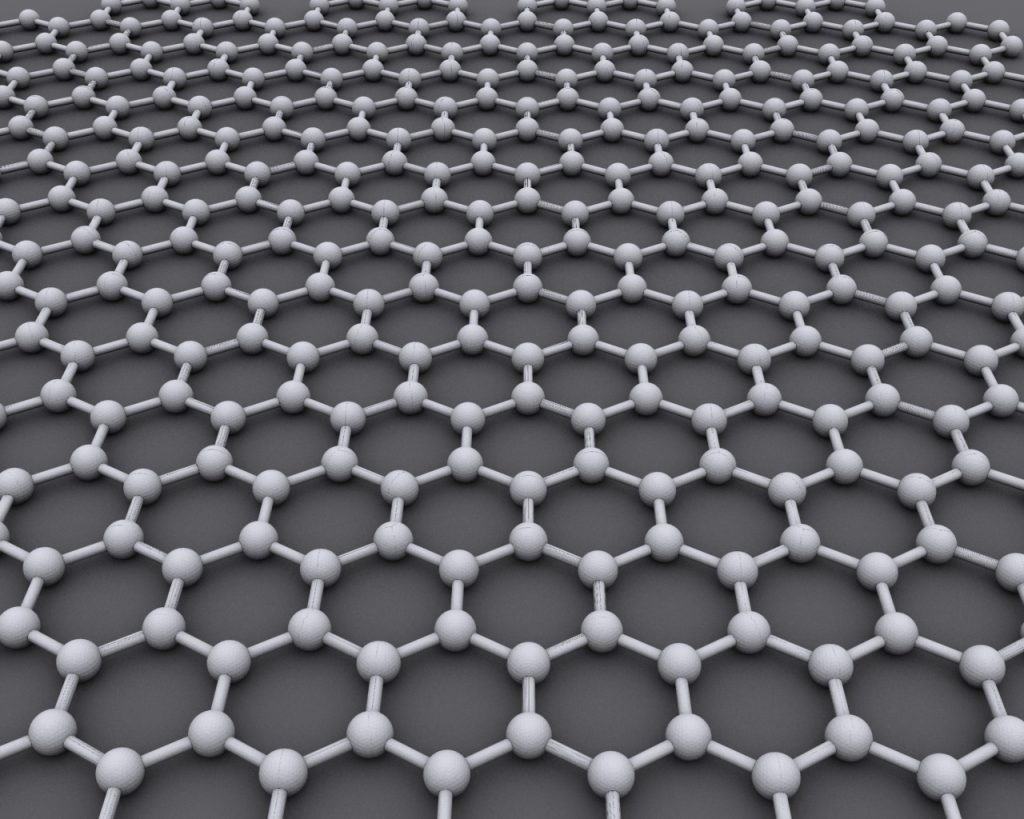
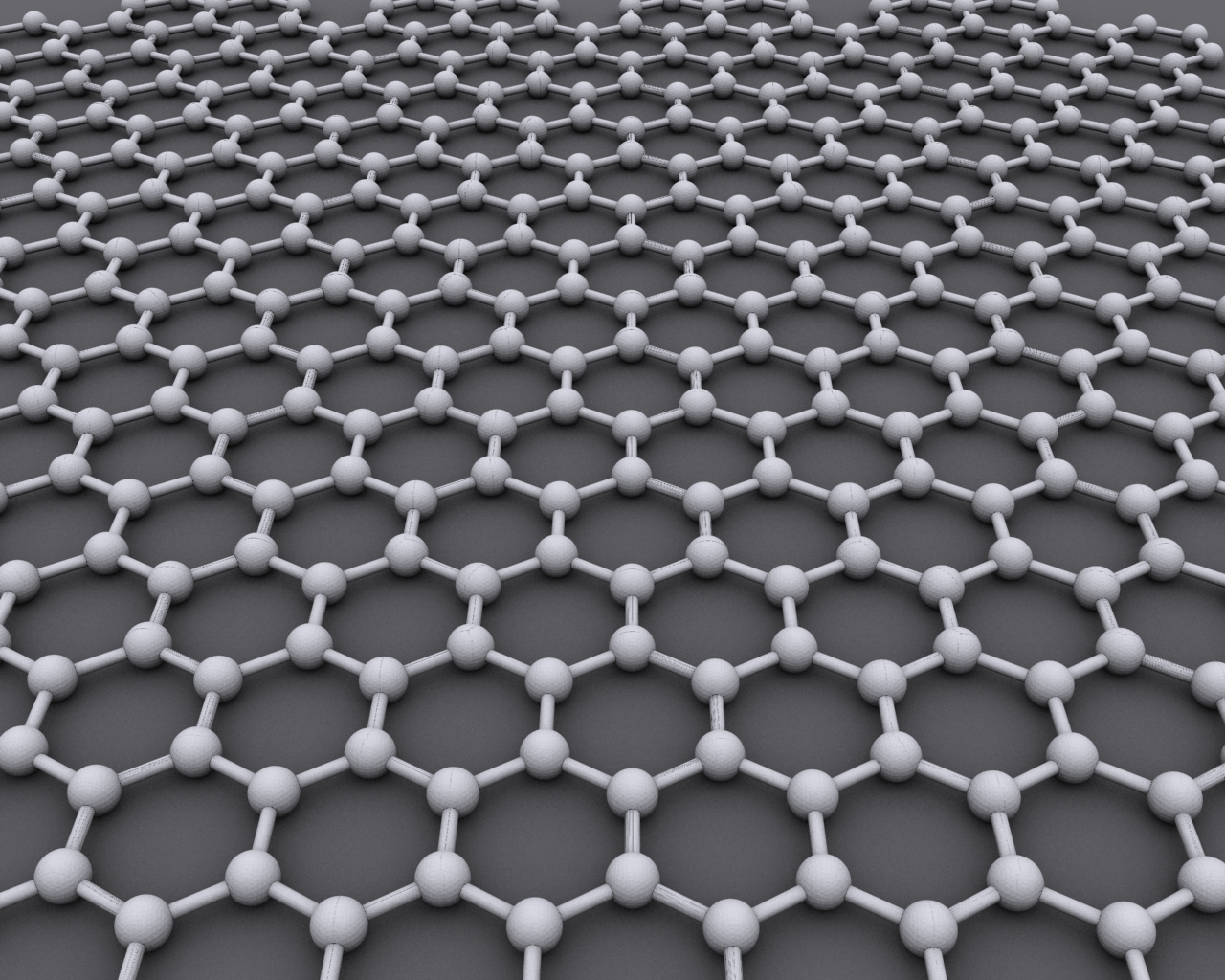
Australian researchers have identified “a new kind of carbon-based material” allowing supercapacitors to store as much energy as lead-acid batteries while also performing better than conventional batteries at delivering power quickly.

According to a statement from the university on Tuesday, the results are “a major leap forward” for fast, powerful energy storage devices, and are now being commercialised by Ionic Industries.

The new material is named as multiscale reduced graphene oxide (M-rGO) and was created from naturally-occurring graphite. It is described as being made using a “rapid thermal annealing process” and featuring a “highly curved graphene structure with precise pathways for ions to move quickly and efficiently”.

The promising new material is detailed in a new paper in Nature Communications.

Monash’s Professor Mainak Majumder, who was part of the research team and heads the ARC Research Hub for Advanced Manufacturing with 2D Materials (AM2D), said that M-rGO made much more surface area available for storing energy, and which was unlocked by the method of heat treatment.

This Gigantic Chinese Mothership Can Launch 100 Drones Over 4,500 ...

This Gigantic Chinese Mothership Can Launch 100 Drones Over 4,500 ...

US drone dilemma: Why the most advanced military in the world is playing catchup on the modern battlefield – CNN
Source Link
Excerpt:

Defense officials are now rushing to catch up.

In July, Secretary of Defense Pete Hegseth circulated a memo to senior leaders aimed at accelerating the US military’s adoption of drones. In recent months, US troops began building and 3-D printing drones and training on simulators reminiscent of video games to learn how to guide small systems through windows, around corners or into an enemy tank’s hatch.

“This is not tomorrow’s problem. This is today’s problem,” Maj. Gen. Curt Taylor, commander of the US Army’s 1st Armored Division, told CNN at an Army conference in Germany in July. “And the first fight of the next war is going to involve more drones than any of us have ever seen.”

COVID-19 is still a threat, but getting a vaccine is harder for many people– www.sciencenews.org

Source Link

Excerpt:

Traveling across state lines in search of an available shot. Scrambling to get a doctor’s prescription. Showing up for a pharmacy vaccination appointment only to be denied. Those are some of the stories people have been describing to journalists and on social media as they share whether or not they could get the latest COVID-19 vaccine, updated to better match coronavirus strains in circulation.

This reality contradicts Health and Human Services Secretary Robert Kennedy Jr.’s testimony in a Sept. 4 congressional hearing that everybody can get the vaccine. In May, the U.S. Food and Drug Administration placed restrictions on who is eligible for the COVID-19 shot. Previously, the Moderna and Pfizer formulations were available for anyone 6 months and older, with Novavax OK’d for those 12 and up. Now, the FDA has stated, those 6 months to 64 years old can receive the vaccine only if they have a medical condition that increases the risk of severe COVID-19 disease.

AI reveals how toughest protein bonds behave– cosmosmagazine.com
Source Link
Excerpt:

Proteins can form “catch-bonds” that tighten under force, much like a finger trap. Credit: Rafael C. Bernardi, Auburn Physics

Researchers have used artificial intelligence to help uncover how certain protein interactions act like a finger trap, gripping tighter the harder they are pulled.

These interactions, known as catch-bonds, are essential in how the body holds together under stress and how bacteria attach to cells.

The researchers suggest that a better understanding of these bonds could help inform the design of new medications and biomaterials.

Scientists have been unsure as to whether these catch-bonds activate straight away or if they need to be stretched to a certain threshold before they ‘switch on’.

The new study discovered that these bonds activate almost immediately after a force is applied.

The first person to get a Neuralink chip in his brain says he met Elon Musk on the day of his surgery: ‘He’s a cool dude’– fortune.com
Source Link
Excerpt:

Attendees at Fortune’s Brainstorm Tech conference last week witnessed a demonstration of both technological innovation and human resilience when Noland Arbaugh, the first human recipient of Neuralink’s brain-computer interface (BCI) chip, played chess using only his thoughts. Arbaugh also shared candid insights into his pioneering journey, including his memorable first encounter with Neuralink’s cofounder and the world’s richest man, Elon Musk.

Arbaugh’s journey began with a diving accident at a summer camp in 2016, which left the former Texas A&M student paralyzed from the shoulders down and largely dependent on his family. For years, Arbaugh lived what he describes as a severely limited existence.

“I would stay up all hours of [the] night, just sleep in whenever, wake up whenever I wanted to because I didn’t really have anything planned, didn’t have anything going on in my life,” he told Fortune senior writer Jessica Mathews during their conversation. Arbaugh said he left his house only a couple of times per year.

“Before Neuralink, I thought I would never travel again,” he said. “[I] thought I would just stay in my room.”

Drug shows promise against aggressive cancers in trial– www.futurity.org
Source Link
Excerpt:

An immunotherapy drug eliminated aggressive cancers in a clinical trial, researchers report.

Over the past 20 years, a class of cancer drugs called CD40 agonist antibodies have shown great promise—and induced great disappointment. While effective at activating the immune system to kill cancer cells in animal models, the drugs had limited impact on patients in clinical trials and caused dangerously systemic inflammatory responses, low platelet counts, and liver toxicity, among other adverse reactions—even at a low dose.

But in 2018, the lab of Rockefeller University’s Jeffrey V. Ravetch demonstrated it could engineer an enhanced CD40 agonist antibody so that it improved its efficacy and could be administered in a manner to limit serious side effects.

The findings came from research on mice, genetically engineered to mimic the pathways relevant in humans. The next step was to have a clinical trial to see the drug’s impact on cancer patients.

Now the results from the phase 1 clinical trial of the drug, dubbed 2141-V11, appear in Cancer Cell. Of 12 patients, six patients saw their tumors shrink, including two who saw them disappear completely.

“Seeing these significant shrinkages and even complete remission in such a small subset of patients is quite remarkable,” says first author Juan Osorio, a visiting assistant professor in Ravetch’s Leonard Wagner Laboratory of Molecular Genetics and Immunology and a medical oncologist at Memorial Sloan Kettering Cancer Center.


Trauma focused therapy shows promise for children with PTSD– cosmosmagazine.com
Source Link
Excerpt:

A new study has demonstrated how a specific form of therapy can help improve symptoms in children living with post-traumatic stress disorder (PTSD), a mental health condition that develops after witnessing or experiencing a traumatic event.

Researchers from the University of East Anglia in Norwich, England have examined the effectiveness of trauma-focused cognitive behavioural therapy (CBT) for treating young children who have been subjected to abuse, violence or serious accidents.

CBT is a treatment for mental health conditions that helps individuals to identify any negative thoughts they may have and teaches them self-help strategies to challenge and reduce these unhelpful thought patterns.

According to the World Health Organisation, roughly 3.9% of the world’s population has experienced PTSD at some stage in their life. While trauma-focused CBT is already used to help treat the disorder in adults, children who experience multiple traumas are often considered harder to treat.

“Recent research has shown that more than 7% of young people in the UK will have developed PTSD at some point by the age of 18,” says Richard Meiser-Stedman, the lead researcher of the study from the University of East Anglia, UK.

YouTube’s paid creators $100 billion in four years– mashable.com
Source Link
Excerpt:

There’s a reason creators often try to migrate their audience to YouTube: It pays.

The Google-owned streaming giant said it has paid out more than $100 billion in the last four years to creators, artists, and media companies. YouTube announced the figure at the Made on YouTube event on Tuesday.

“We didn’t just create a platform. We built an economy,” said YouTube CEO Neal Mohan.

As Mashable reported earlier this year, creator jobs have grown 7.5 times in recent years. In surveys, young people also consistently identify being a creator as a popular career goal. And YouTube has played an outsized role in building the modern creator economy.

It pays to be a popular creator and/or influencer on any platform, but YouTube’s widely regarded as the most lucrative social media site when it comes to direct view-to-payment value. And creators are making more money off of folks watching YouTube on traditional TV sets, rather than mobile devices. The company reported that the number of YouTube channels making more than $100,000 from TV screens rose 45 percent year over year.

Clearly, YouTube isn’t just for streamers anymore. Heck, the platform is broadcasting NFL games — arguably the single biggest product in American culture — with great success. But if you want to make it big as a creator, YouTube remains the place where you can carve out a highly lucrative living.

Was There Life on Mars? - NASA Science

Was There Life on Mars? - NASA Science

Life on Mars: NASA rover discovers strongest sign of life on Mars to date; all you need to know |– timesofindia.indiatimes.com
Source Link
Excerpt:

NASA’s Perseverance rover has uncovered what scientists describe as the most compelling evidence yet of possible life on Mars. A mudstone core drilled in July 2024 from a rock named “Chevaya Falls” within the Bright Angel region of Jezero Crater has revealed minerals and textures commonly linked with microbial activity on Earth. The sample contains vivianite, an iron phosphate, and greigite, an iron sulfide, both often formed in water-rich, oxygen-poor environments. These patterns, including “leopard spot” textures, suggest ancient chemical reactions that may have supported microbial life. While NASA stresses this is not proof of life, the findings represent the closest scientists have come to identifying a potential biosignature on the Red Planet.

The drilled core revealed fine-grained mudstone with circular reaction fronts called “leopard spots” and nodules embedded within layered sediments. Instruments aboard Perseverance, SHERLOC and PIXL, mapped organic carbon alongside phosphate, iron, and sulfur arranged in repeating patterns. The minerals vivianite and greigite stood out because, on Earth, they form in microbial-influenced environments. This bullseye-like arrangement mirrors electron transfer reactions that microbes perform in oxygen-poor muds. Importantly, these features developed in water-laid sediments rather than volcanic rock, strengthening the case for ancient habitability.

Ghost Guns: What They Are, and Why They Are an Issue Now - The New ...

Ghost Guns: What They Are, and Why They Are an Issue Now - The New ...

Researchers embed digital ‘fingerprints’ into 3D printed parts — tech may make future ghost guns more traceable – Tom’s Hardware
Source Link
Excerpt:

Netanel Raviv and a team at the McKelvey School of Engineering (part of Washington University in St. Louis) are continuing to develop a way to embed traceable digital ‘fingerprints’ into 3D-printed objects.

Initially reported by 3D Printing Industry, the markers are designed in a way to be detectable, even if the printed object has been broken, because they can be identified with just a fragment of the object. Depending on the fingerprint, information such as what printer was used and when the object was created can be embedded in the print.

One of the biggest practical use cases for this development is, of course, forensics. Traceable fingerprints are crucial for helping law enforcement track ghost gun manufacturing operations. We reported on a similar approach just a few months ago in which police were able to identify markers left behind when printing.

Best Anti Aging Stem Cell Treatment for Face – Cost, Types and New ...

Best Anti Aging Stem Cell Treatment for Face – Cost, Types and New ...

Scientists test an anti-aging cream that actually works– www.sciencedaily.com
Source Link
Excerpt:

Against the backdrop of high market demand for effective anti-ageing cosmetics, a team of Chinese researchers assessed the clinical effectiveness of a 0.1 % pterostilbene-containing skincare emulsion against a control emulsion over 28 days with 31 participants.

The study employed a double-blind, split-face design, comparing the left and right sides of the face and using advanced instruments along with subject self-assessments. The set of instruments used, together with the findings, is reported in the team’s published article in the Journal of Dermatologic Science and Cosmetic Technology.

“Our results indicated that the pterostilbene emulsion remarkably improved skin elasticity, firmness, and reduced wrinkles, such as forehead, undereye, and Crow’s feet wrinkles, shares co-author Zhiyuan Chen, Founder of Guangzhou Luanying Cosmetics Co., Ltd. “It also increased the thickness of the epidermis layer, enhanced collagen and elastic fibers, and minimized skin pores.”

Compared to the control emulsion, the pterostilbene emulsion brought about statistically significant improvements, and all subjects expressed higher satisfaction with the pterostilbene emulsion. These results collectively demonstrated the superior anti-aging efficacy of the pterostilbene emulsion through multiple mechanisms.

Risks and Benefits of AI for Businesses and Cybersecurity | SBS

Risks and Benefits of AI for Businesses and Cybersecurity | SBS

New AI-Shaped Constitution for Colombia: Presidential Hopeful’s Bold Proposal – ColombiaOne.com
Source Link
Excerpt:

Colombia’s presidential hopeful and Senator Clara Lopez is calling for a new constitution that would be designed with the assistance of artificial intelligence (AI), to modernize governance structures.

A veteran of leftist politics and a prominent voice within the Pacto Historico coalition (President Petro’s coalition), Lopez addressed President Gustavo Petro in an open letter where she urges the government to seize the opportunity of a constituent assembly to create what she described as the world’s first “nation of direct democracy.”

Her vision would allow citizens to design a new social contract using digital platforms powered by AI. In her words, young people, women, Indigenous communities, Afro-Colombians, farmers, entrepreneurs, migrants, scientists, and artists would all have the chance to co-create a constitutional model where every voice counts.