


June 29, 2026

05 Sci-Tech

Smoke-dried human remains found in Asia may be world’s oldest known mummies, researchers say– www.cbsnews.com
Source Link
Excerpt:

Scientists have discovered what’s thought to be the oldest known mummies in the world in southeastern Asia dating back up to 12,000 years.

Mummification prevents decay by preserving dead bodies. The process can happen naturally in places like the sands of Chile’s Atacama Desert or the bogs of Ireland where conditions can fend off decomposition. Humans across various cultures also mummified their ancestors through embalming to honor them or send their souls to the afterlife.

Egypt’s mummies may be the most well-known, but until now some of the oldest mummies were prepared by a fishing people called the Chinchorro about 7,000 years ago in what’s now Peru and Chile.

A new study published Monday in the journal Proceedings of the National Academy of Sciences pushes that timeline back.

TikTok ‘framework’ deal overshadows U.S.-China trade talks– www.cnbc.com
Source Link
Excerpt:

U.S. and Chinese trade negotiations concluded in Spain Monday, after two days of talks on several sticking points ranging from tariff rates, export controls and the imminent deadline for a divestment of Chinese-owned TikTok.

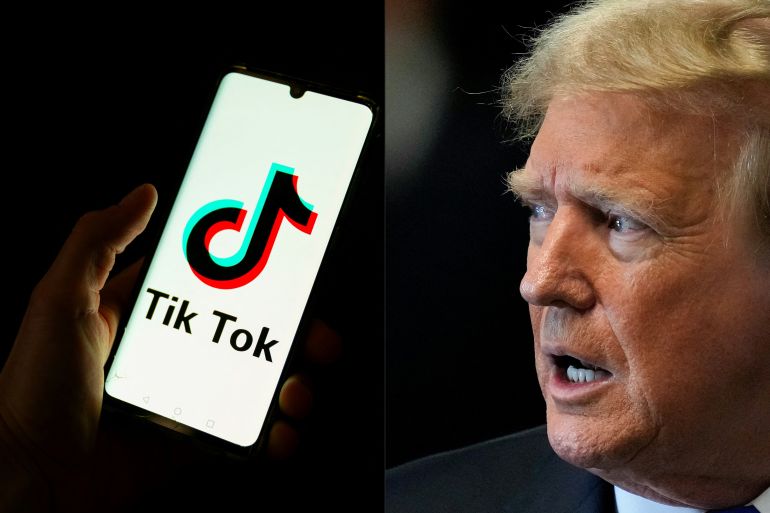
Talks on trade were overshadowed by a “framework” deal regarding the social media platform, announced by Treasury Secretary Scott Bessent Monday.

“It’s between two private parties, but the commercial terms have been agreed upon,” he said from U.S.-China talks in Madrid. Both President Donald Trump and Chinese President Xi Jinping will speak on Friday to discuss the terms.

The news comes ahead of a Wednesday deadline to either divest TikTok’s U.S. business or shut down the social media app in the country.

Bessent led negotiations alongside Trade Representative Jamieson Greer on the U.S. side, with the Chinese represented by Vice Premier He Lifeng and top trade negotiator Li Chenggang.

TikTok restoring US service as Trump promises executive order to ...

TikTok restoring US service as Trump promises executive order to ...

Trump signals deal on trade and TikTok made with China– www.washingtonexaminer.com
Source Link
Excerpt:

President Donald Trump teased on Monday that a deal has been made with China regarding trade and the future of TikTok.

“The big Trade Meeting in Europe between The United States of America, and China, has gone VERY WELL! It will be concluding shortly,” Trump wrote on Truth Social.

“A deal was also reached on a ‘certain’ company that young people in our Country very much wanted to save,” he said, referring to TikTok. “They will be very happy!”

TikTok was set to be inaccessible to American users in January, but Trump delayed the start date of the ban’s enactment to find an American buyer for the social media platform. China’s ByteDance owns the app, which poses national security concerns for the United States.

After months of negotiations and setbacks, Treasury Secretary Scott Bessent said the U.S. and China are “very close” to finalizing a deal on TikTok.

“We made very good progress on the technical details of the agreement. In terms of the overall agreement itself, our Chinese counterparts have come with a very aggressive ask,” he told reporters in Madrid, Spain, on the second day of talks. “We will see if we can get there. At present, we are not willing to sacrifice our national security for a social media app.”

Medical education needs to stop burning out students

Medical education needs to stop burning out students

Report outlines DEI impact on US medical schools – The North State Journal
Source Link
Excerpt:

A new report issued by the James G. Martin Center outlines how diversity, equity and inclusion at medical schools in the United States compromises “academic standards, undermine merit-based admissions and hiring, and jeopardize public health outcomes.”

“Medical education must prioritize competence, not ideology,” Jenna A. Robinson, James G. Martin Center president said in a press release. “This report reveals the extent to which DEI policies are weakening the physician pipeline at a time when Americans need highly skilled, well-trained doctors.”

Authored by Martin Center Senior Fellow Jay Schalin, the report, “An End to Excellence: How Diversity, Equity, and Inclusion Undermine Our Medical Schools,” looked at the 10 top-ranked American medical schools with respect to diversity, equity and inclusion (DEI) programs and policies.

The schools in the report include Harvard Medical School, Johns Hopkins University School of Medicine, University of California at San Francisco School of Medicine, University of Michigan Medical School, Stanford University School of Medicine, University of Washington School of Medicine, Perelman School of Medicine at the University of Pennsylvania, Yale School of Medicine, David Geffen School of Medicine at the University of California at Los Angeles and Weill Cornell Medicine.

Schalin’s report examines how DEI policies, described as an aggressive extension of affirmative action, have eroded meritocracy in the nation’s medical schools by prioritizing race, gender and ideologies in areas like admissions, faculty hiring, curricula and student programs, potentially leading to less competent physicians and compromised health care.

How decades of expertise with the fourth state of matter could ...

How decades of expertise with the fourth state of matter could ...

“Scientists Panic as Satellites Die Without Warning”: Los Alamos Discovers Electron Buildup Creates Deadly 45-Minute Death Countdown for Space Equipment – Energy Reporters
Source Link
Excerpt:

… Researchers have discovered that these Spacecraft Environment Discharges (SEDs) are closely linked to the number of electrons in the satellite’s immediate vicinity. Historical events, such as the 1994 solar storm that disabled two Canadian television satellites, illustrate the vulnerability of space equipment to these phenomena. The Los Alamos study underscores the importance of understanding electron activity and its impact on satellite reliability.

… Over a twelve-month period, the study documented hundreds of instances where high electron activity preceded SEDs. Remarkably, 75% of these discharges were preceded by a surge in electron activity, with a short lead time of thirty to forty-five minutes. This finding is significant because it suggests the possibility of developing an onboard prediction system to alert operators before a failure occurs…

The implications of the Los Alamos study are profound. With the ability to predict SEDs, future satellite missions could incorporate continuous electron monitoring systems. This proactive approach would enable operators to anticipate and potentially avert sudden electronic failures, enhancing the resilience of satellites against unpredictable space weather…

AI could use online images as a backdoor into your computer, alarming new study suggests– www.livescience.com
Source Link
Excerpt:

A website announces, “Free celebrity wallpaper!” You browse the images. There’s Selena Gomez, Rihanna and Timothée Chalamet — but you settle on Taylor Swift. Her hair is doing that wind-machine thing that suggests both destiny and good conditioner. You set it as your desktop background, admire the glow. You also recently downloaded a new artificial-intelligence-powered agent, so you ask it to tidy your inbox. Instead it opens your web browser and downloads a file. Seconds later, your screen goes dark.

But let’s back up to that agent. If a typical chatbot (say, ChatGPT) is the bubbly friend who explains how to change a tire, an AI agent is the neighbor who shows up with a jack and actually does it. In 2025 these agents — personal assistants that carry out routine computer tasks — are shaping up as the next wave of the AI revolution.

What distinguishes an AI an agent from a chatbot is that it doesn’t just talk — it acts, opening tabs, filling forms, clicking buttons and making reservations. And with that kind of access to your machine, what’s at stake is no longer just a wrong answer in a chat window: if the agent gets hacked, it could share or destroy your digital content. Now a new preprint posted to the server arXiv.org by researchers at the University of Oxford has shown that images — desktop wallpapers, ads, fancy PDFs, social media posts — can be implanted with messages invisible to the human eye but capable of controlling agents and inviting hackers into your computer.

For instance, an altered “picture of Taylor Swift on Twitter could be sufficient to trigger the agent on someone’s computer to act maliciously,” says the new study’s co-author Yarin Gal, an associate professor of machine learning at Oxford. Any sabotaged image “can actually trigger a computer to retweet that image and then do something malicious, like send all your passwords. That means that the next person who sees your Twitter feed and happens to have an agent running will have their computer poisoned as well. Now their computer will also retweet that image and share their passwords.”

Trump to sign nuclear energy deal with UK– www.washingtonexaminer.com
Source Link
Excerpt:

LONDON — The United States will finalize a new nuclear energy agreement with British leaders during President Donald Trump‘s state visit to the United Kingdom this week.

Trump will touch down in London on Tuesday before spending Wednesday at Windsor Castle with King Charles III, capped by a lavish state banquet in the evening.

The nuclear agreement itself, which British government officials said “will turbocharge the build-out of new nuclear power stations in both countries and clear the way for a major expansion of new nuclear projects in the U.K.,” will be signed on Thursday during a slate of bilateral meetings between Trump and British Prime Minister Keir Starmer.

“This landmark UK-US nuclear partnership is not just about powering our homes, it’s about powering our economy, our communities, and our ambition. These major commitments set us well on course to a golden age of nuclear that will drive down household bills in the long run, while delivering thousands of good jobs in the short term,” Starmer said in a statement to the Washington Examiner. “Together with the US, we’re building a golden age of nuclear that puts both countries at the forefront of global innovation and investment.”

Trump’s energy secretary, Chris Wright, said the administration is “ushering in a true nuclear renaissance — harnessing the power of commercial nuclear to meet rising energy demand and fuel the AI revolution.”

Interior Secretary Doug Burgum added, “Strengthened nuclear cooperation with the UK reinforces our unshakable commitment to technological leadership, global security and the responsible stewardship of nuclear power. This is how we unleash the full power of American Energy Dominance — with innovation, strength, and key geopolitical collaboration.”

Elon Musk’s xAI lays off 500 in overnight restructuring of Grok training workforce– www.techspot.com
Source Link
Excerpt:

Business Insider obtained an internal email informing workers that the firm plans to prioritize “specialist AI tutors” over generalist roles and will immediately eliminate most general tutoring positions. The company told employees that it would honor their contracts through either November 30 or their previously agreed-upon end dates, but it…

TikTok removes video honoring Charlie Kirk: violates ‘community guidelines’– www.thecollegefix.com
Source Link
Excerpt:

A video by The College Fix honoring TPUSA leader Charlie Kirk in the wake of his assassination has been removed by TikTok, which states the video violates “community guidelines.”

The five-minute video, posted to all The College Fix’s media platforms on Saturday, features Assistant Editor Gabrielle Temaat expressing heartbreak over Kirk’s assassination. It then showcases three clips of Kirk debating students on various hot-button topic, and ends by quoting reactions to his murder.

The video was accepted on X, YouTube and Facebook with no problems….

UK and US share defence intelligence through Google Cloud– www.army-technology.com
Source Link
Excerpt:

The UK Ministry of Defence (MoD) announced that it will contribute £400m ($543.5m) toward securing intelligence sharing with the United States through the Google Cloud platform.

Slightly subsumed by the extensive industry activity to come out of DSEI 2025 last week, the move to secure communications between the two nations will exploit the latest technology, including, the MoD stated, artificial intelligence (AI), data analytics, and cyber security.

Combine business intelligence and editorial excellence to reach engaged professionals across 36 leading media platforms.

Defence intelligence and national security specialists on both sides of the Atlantic will share secure information and “outcompete” their adversaries, namely Russia and China.

The deal has already led to millions of pounds of inward investment from Google Cloud, the UK government suggested without revealing any specific sum, the US company will recruit a specialist dedicated team in Britain to manage these technologies.

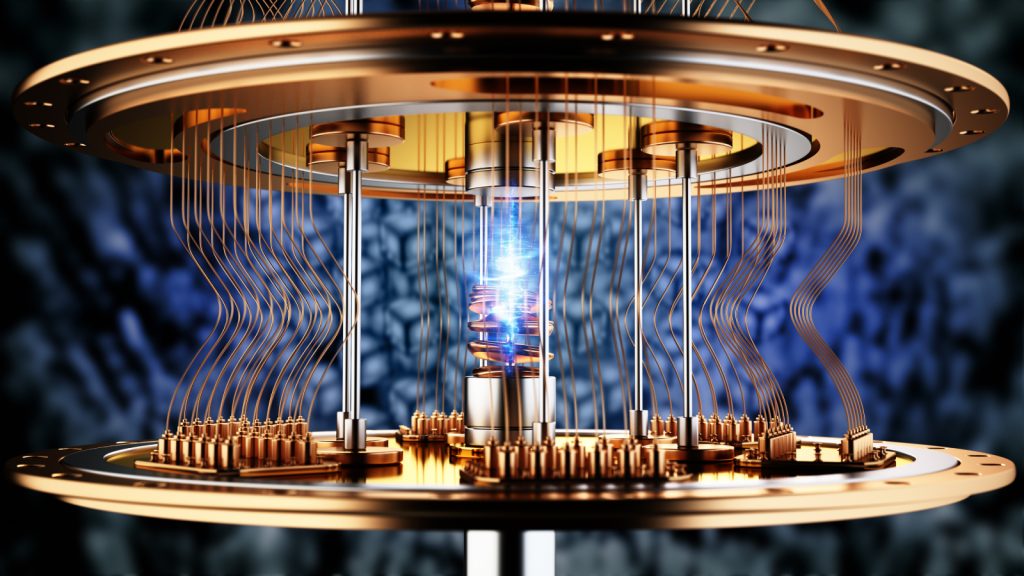
Quantum computers are here — but why do we need them and what will ...

Quantum computers are here — but why do we need them and what will ...

Scientist returns to microbial roots and discovers potential quantum computing advancement – Phys.org
Source Link
Excerpt:

To date, his lab at the Yale Microbial Sciences Institute has uncovered the evolutionary trick used by bacteria to breathe through tiny protein filaments, called nanowires, to dispose of excess electrons from the conversion of organic waste to electricity.

The adaptation has enabled bacteria to send electrons over distances 100-times their size through what the scholars refer to as bacterial “snorkeling.”

From its base on Yale’s West Campus, the lab’s previous work revealed the role and atomic structures of the nanowires, but to explain how the electrons were moving so fast, Malvankar found himself returning to where he began—the world of quantum theory.

“Biological theory just couldn’t explain their speed,” explained the associate professor of molecular biophysics and biochemistry. “Either our measurements were wrong, or we needed a new theory.”

What are the leading companies in 3D bioprinting Industry?

What are the leading companies in 3D bioprinting Industry?

UP student develops 3D bio-printing alternative to skin grafts – The Witness | Your compass in the community
Source Link
Excerpt:

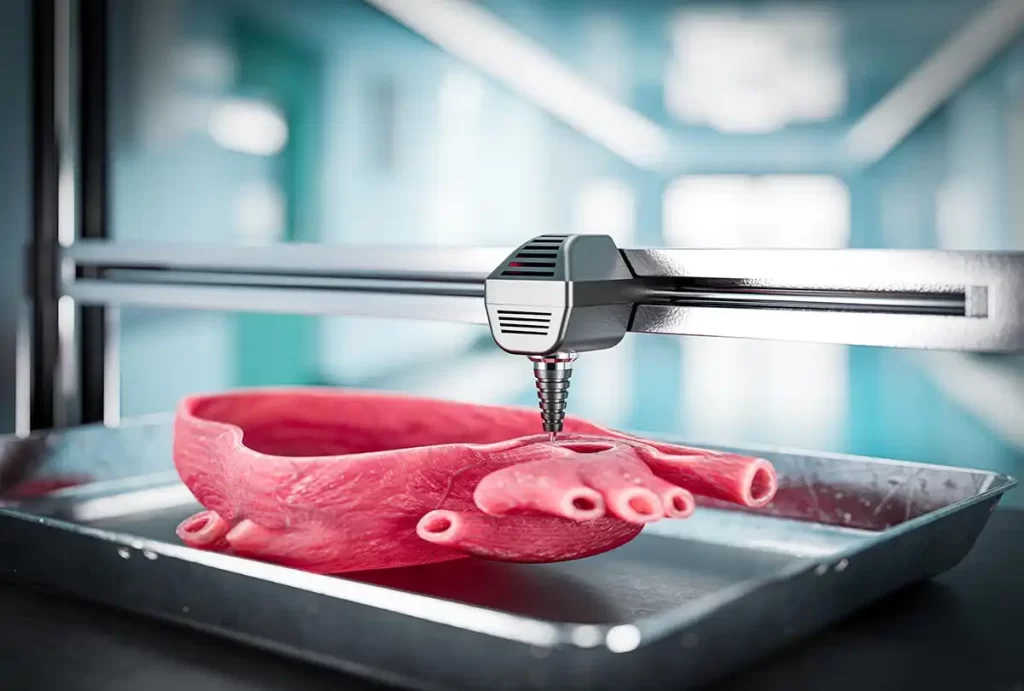
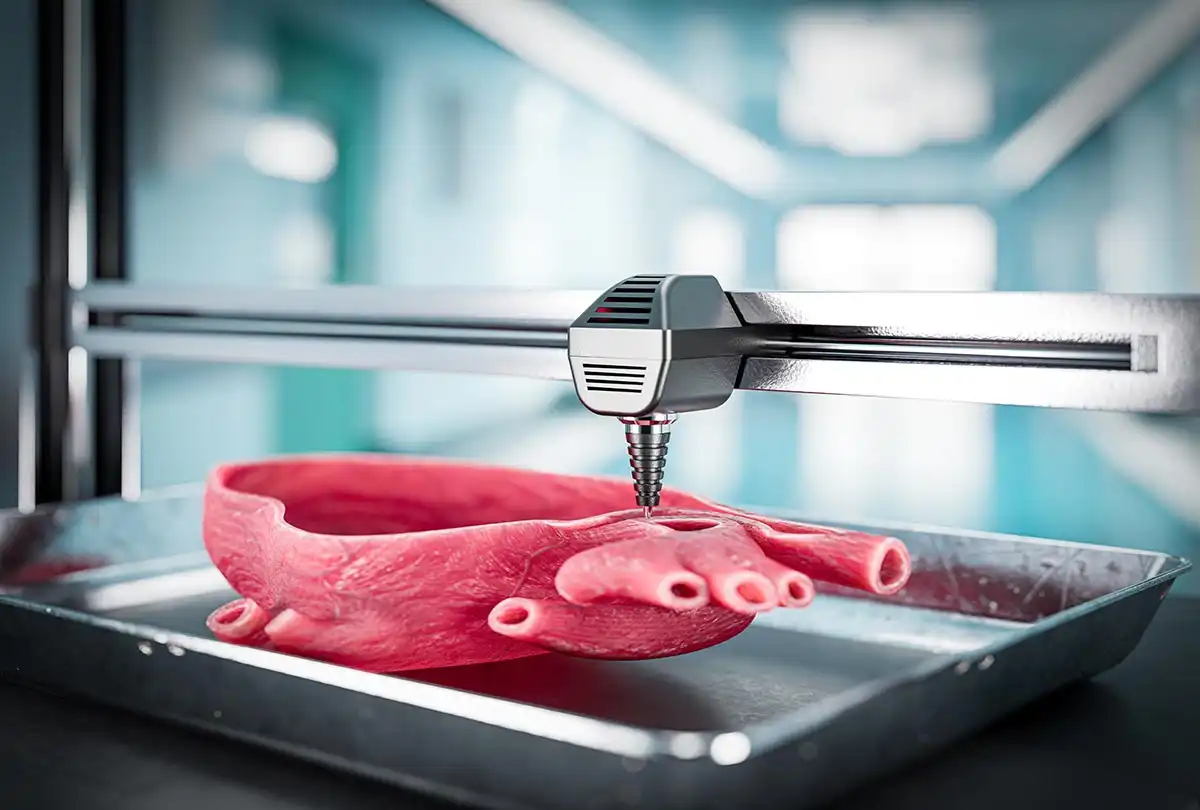
Research by a University of Pretoria (UP) PhD graduate has led to the development of a skin replacement product that paves the way for 3D bioprinting of “natural” skin replacement products, offering an alternative to traditional skin grafts.

Dr Hafiza Parkar, a lecturer in UP’s Department of Pharmacology, received her PhD in Pharmacology during UP’s Spring Graduation season in the first week of September.

She said her research is particularly significant for treating secondary intention wounds, which are wounds left open to heal by themselves rather than being stitched together, such as ulcers and burns.

“Creating advanced dermal substitutes that replicate human skin offers a promising solution for treating secondary intention wounds,” Parkar said.

High metabolism is an early sign of Alzheimer's disease ...

High metabolism is an early sign of Alzheimer's disease ...Alzheimer’s breakthrough: Simple blood test hailed as ‘game-changer’ for diagnosis – Kursiv Media
Source Link
Excerpt:

A clinical trial in the U.K. is evaluating a new blood test that could reshape how Alzheimer’s disease is diagnosed, according to The National.

Participants showing early signs of dementia are being recruited through NHS memory clinics to evaluate the test’s effectiveness. Researchers expect to have conclusive results within the next three years.

The project, led by University College London, focuses on whether measuring levels of the protein p-tau217 in blood samples can lead to faster and more accurate detection of Alzheimer’s disease. Early studies indicate that the test can identify individuals with cognitive decline with about 80 percent accuracy as being likely to have the disease.

First identified in 1906 by German physician Alois Alzheimer, Alzheimer’s disease is the leading cause of dementia in older adults and is marked by a progressive decline in cognitive abilities.

Alzheimer’s is associated with the accumulation of amyloid and tau proteins in the brain. P-tau217 is considered a particularly strong biomarker because it signals the presence of both.

Scientists stunned by discovery of three never-before-seen snailfish in the Pacific Ocean |– timesofindia.indiatimes.com
Source Link
Excerpt:

Source: Ichthyology and Herpetology

In a groundbreaking advancement for marine science, researchers have discovered a new species of deep-sea snailfish, named the bumpy snailfish (Careproctus colliculi). This discovery emphasises the critical need to study deep-ocean biodiversity, particularly as global climate change and human activity continue to impact marine ecosystems.The bumpy snailfish represents more than just a new addition to marine taxonomy. Using MBARI’s cutting-edge underwater technology, scientists from the Monterey Bay Aquarium Research Institute (MBARI) and the State University of New York at Geneseo (SUNY Geneseo) were able to capture detailed observations of this unique species. Their research, published in the journal Ichthyology and Herpetology sheds light on the adaptations and survival strategies of deep-sea organisms and highlights the extraordinary biodiversity hidden within the largely unexplored depths of the ocean.

Google Chrome - The Fast & Secure Web Browser Built to be Yours

Google Chrome - The Fast & Secure Web Browser Built to be Yours

At one point, it looked as if Google would be busted up by the Federal government for having a monopoly on search engines. Now, that possibility is gone after U.S. District Court Judge Amit P. Mehta ruled Google will not be busted up.

Google avoids breakup as court ruling fuels AI Mode expansion – Digital Watch Observatory
Source Link
Excerpt:

A US district judge has declined to order a breakup of Google, softening the blow of a 2024 ruling that found the company had illegally monopolised online search.

The decision means Google can press ahead with its shift from a search engine into an answer engine, powered by generative AI.

Google’s AI Mode replaces traditional blue links with direct responses to queries, echoing the style of ChatGPT. While the feature is optional for now, it could become the default.

That alarms publishers, who depend on search traffic for advertising revenue. Studies suggest chatbots reduce referral clicks by more than 90 percent, leaving many sites at risk of collapse.

Google is also experimenting with inserting ads into AI Mode, though it remains unclear how much revenue will flow to content creators. Websites can block their data from being scraped, but doing so would also remove them from Google search entirely.

Despite these concerns, Google argues that competition from ChatGPT, Perplexity, and other AI tools shows that new rivals are reshaping the search landscape.

The judge even cited the emergence of generative AI as a factor that altered the case against Google, underlining how the rise of AI has become central to the future of the internet.

Forest City, the case of the ghost town on the Malaysian coast - Domus

Forest City, the case of the ghost town on the Malaysian coast - Domus

Tech investor Balaji Srinivasan has announced plans to move into an abandoned resort city in Malaysia called Forest City where he hopes to build a “network state.”

Tech Utopians Are Using a Chinese-Built ‘Ghost City’ to Trial Their Network State Fantasies – Gizmodo
Source Link
Excerpt:

For the better part of a decade, tech investor Balaji Srinivasan has been calling for Silicon Valley to “secede” from the rest of the United States. The free-market tech guru doesn’t just want space from regulators and government officials; he literally wants the industry’s coders and bigwigs to split off and crowdfund their own separate country.

Over the years, Srinivasan has articulated his own political philosophy, which he calls “the network state” movement—an anarcho-capitalist school of thought that envisions the creation of privately run “countries” that are governed by decentralized corporations rather than governments.

Last year, Srinivasan announced the launch of a new school where interested tech denizens could learn how to take part in the Network State movement. The school, which was announced on his blog, was styled as a place where the founder’s followers could go to learn about the tenets of his philosophy, which is, admittedly, pretty weird.

ICE detainees on hunger strike are being force-fed, just like ...

ICE detainees on hunger strike are being force-fed, just like ...

San Francisco Resident Guido Reichstadter, 45, is leading a hunger strike to stop Anthropic from further developing artificial general intelligence.

Activists launch hunger strikes outside Anthropic and DeepMind offices over race to build advanced AI– www.techspot.com
Source Link
Excerpt:

45-year-old Guido Reichstadter has been camped outside Anthropic’s San Francisco offices for just over a week now, during which time he has not consumed any food. He told Business Insider that he plans to stay there on hunger strike until the company addresses his concerns about its AI development.

In a message posted to online forum LessWrong, Reichstadter wrote, “I am calling on Anthropic’s management, directors, and employees to immediately stop their reckless actions, which are harming our society and to work to remediate the harm that has already been caused.”

The Third Wave Of AI Is Here: Why Agentic AI Will Transform The ...

The Third Wave Of AI Is Here: Why Agentic AI Will Transform The ...

AI has no idea what it’s doing, but it’s threatening us all– www.sciencedaily.com
Source Link
Excerpt:

The age of artificial intelligence (AI) has transformed our interactions, but threatens human dignity on a worldwide scale, according to a study led by Charles Darwin University (CDU).

Study lead author Dr Maria Randazzo, an academic from CDU’s School of Law, found the technology was reshaping Western legal and ethical landscapes at unprecedented speed but was undermining democratic values and deepening systemic biases.

Dr Randazzo said current regulation failed to prioritize fundamental human rights and freedoms such as privacy, anti-discrimination, user autonomy, and intellectual property rights – mainly thanks to the untraceable nature of many algorithmic models.

Calling this lack of transparency a “black box problem,” Dr Randazzo said decisions made by deep-learning or machine-learning processes were impossible for humans to trace, making it difficult for users to determine if and why an AI model has violated their rights and dignity and seek justice where necessary.

“This is a very significant issue that is only going to get worse without adequate regulation,” Dr Randazzo said.

“AI is not intelligent in any human sense at all. It is a triumph in engineering, not in cognitive behavior.